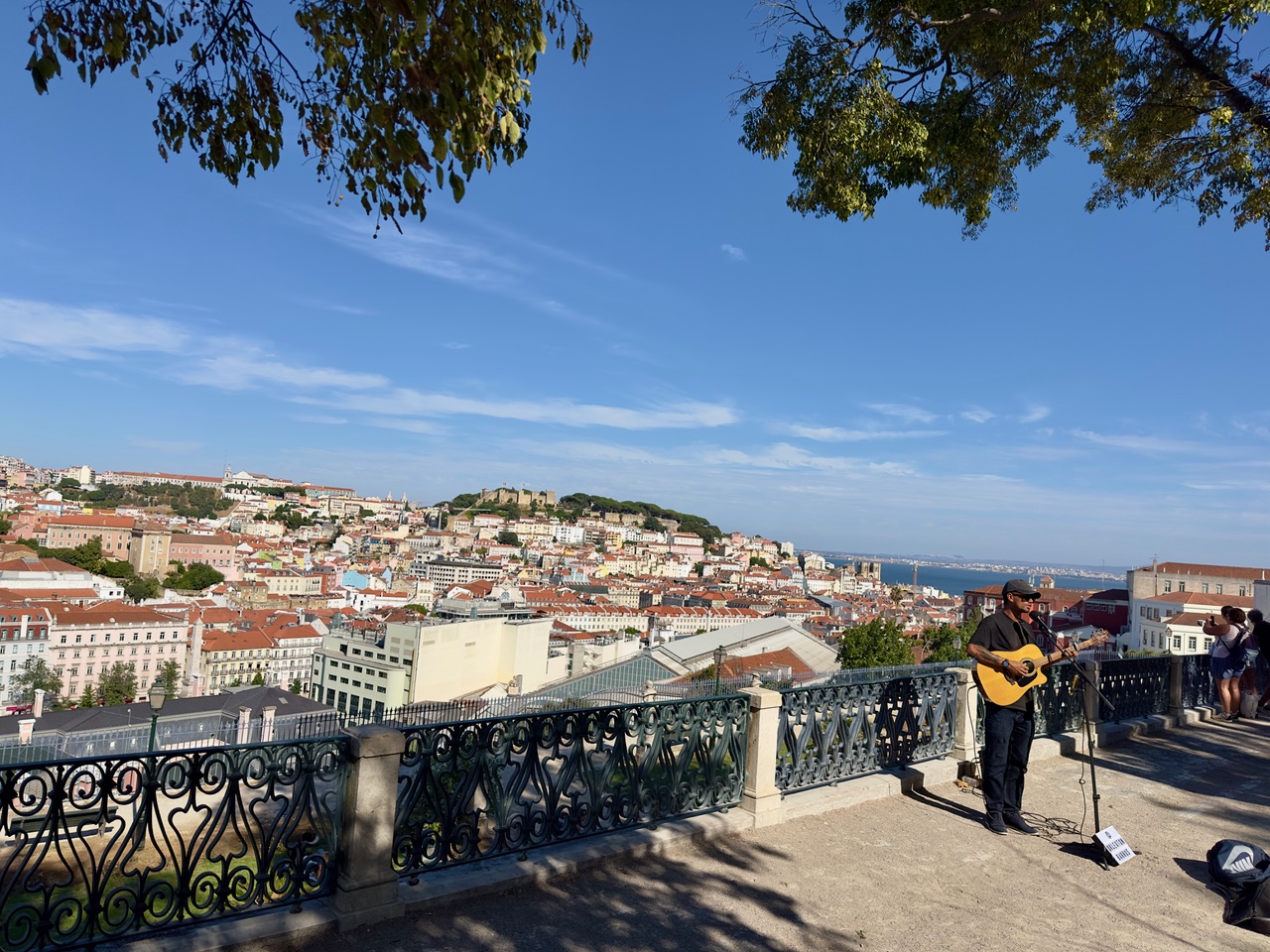
Best 3 Days in Lisbon: An Itinerary for First-Time Visitors
What should you do to have the best 3 days in Lisbon on your first visit?
TravelingNature.com contains affiliate links. If you make a purchase using one of the links below, we may receive compensation at no extra cost to you. We only recommend products and services we use and trust. Read our disclaimer for more information.
If you are spending three days in Lisbon, you can visit some distinctive sights as well as have time to wander and enjoy this fabulous city. From the Calçada Portuguesa, the beautiful hand-laid mosaic sidewalks, to the tiled buildings of various colors, Lisbon streets make strolling a destination in itself. With so many parks and plazas featuring restaurants, kiosks, and street musicians, a trip must include time for simply exploring and relaxing.
I have spent many weeks enjoying Lisbon’s many attractions and the city’s cool, friendly vibe. If your first trip only gives you three days in town, here are my recommendations for making the most of your time. I wouldn’t be surprised if you decide to return in the future.
Day One of 3 Days In Lisbon
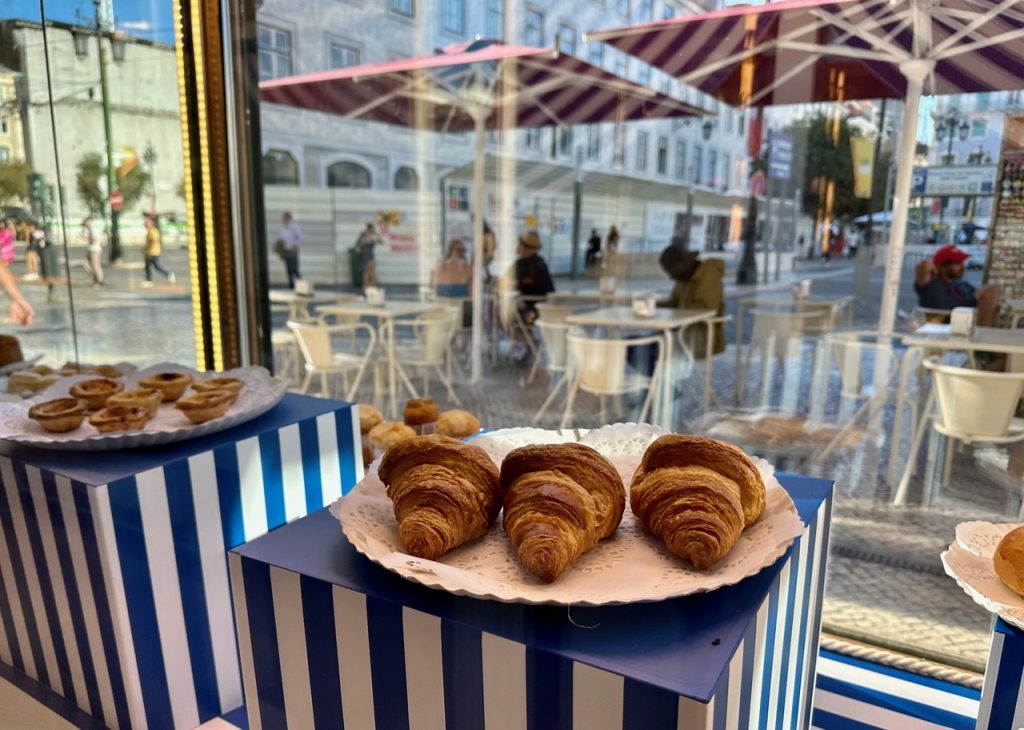
Breakfast at Confeiteria Nacional
Start your morning by choosing from the beautiful display case of pastries at Confeiteria Nacional on the Praça da Figueira. This bakery, founded in 1823, once served the royal house of Portugal. You can taste your first of probably many pasteis de nata, the national specialty.
Saint George Castle
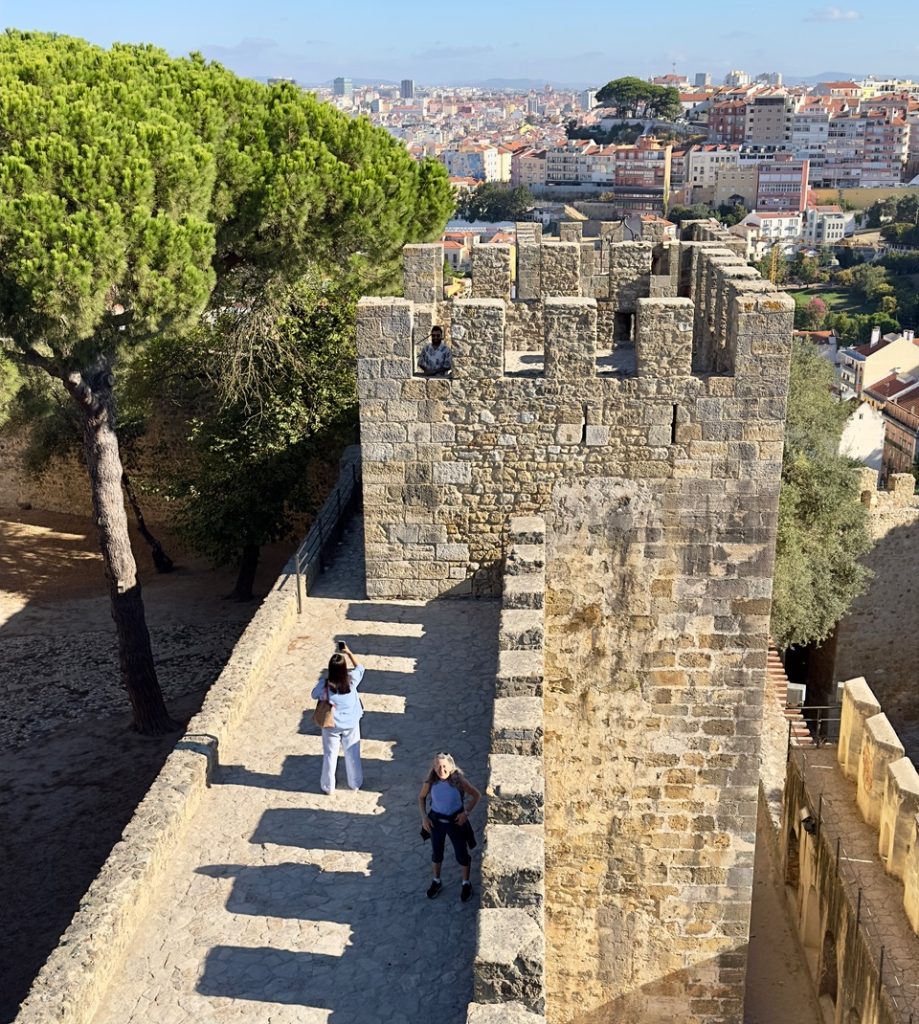
The perfect three days in Lisbon begins with one of the best views of the city and the Tagus River from the walkways on top of the walls of the Castelo de São Jorge. This defensive position was used during the Roman and Islamic occupations. Visitors can explore the current castle, built during the 13th century, and the stone plazas surrounding it.
Buy tickets online for the 9:00am opening time to avoid the lines and crowds.
Book a tour for São Jorge Castle by clicking here.
Monastery of São Vincente de Fora
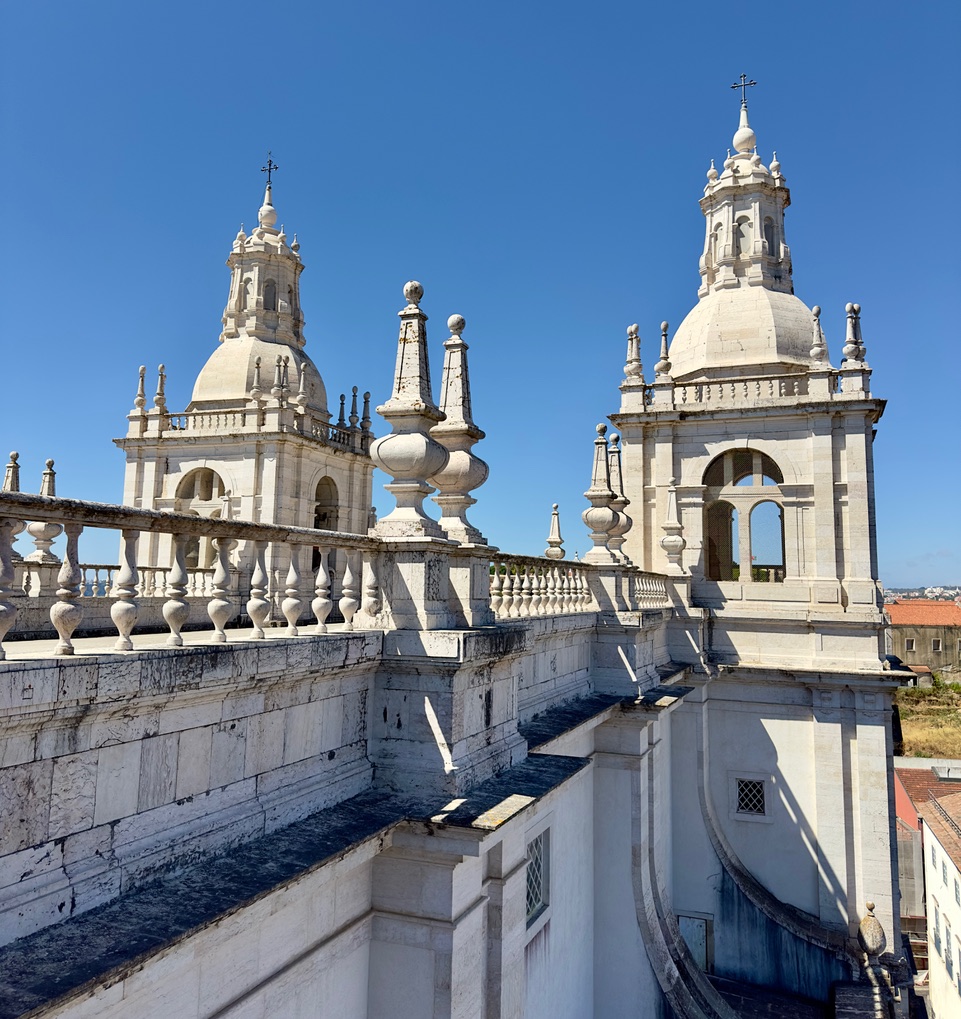
Stroll downhill through the Alfama neighborhood for about 15 minutes to the Monastery of São Vincente de Fora. Lisbon offers many gorgeous churches to explore, and this is one of my favorites. 65 blue and white glazed-tiled panels, created in 1737, line the walls and depict landscapes and scenes from daily life.
Climb the stairs up to the expansive roof with a 360-degree view of the east side of Lisbon. Don’t miss the mannerism-style chapel built in the 16th century (which I somehow missed on my first visit) or the elaborate sacristy. Also, step into the Royal Pantheon of the Bragança to see one of the most haunting sculptures I have ever viewed.
National Pantheon
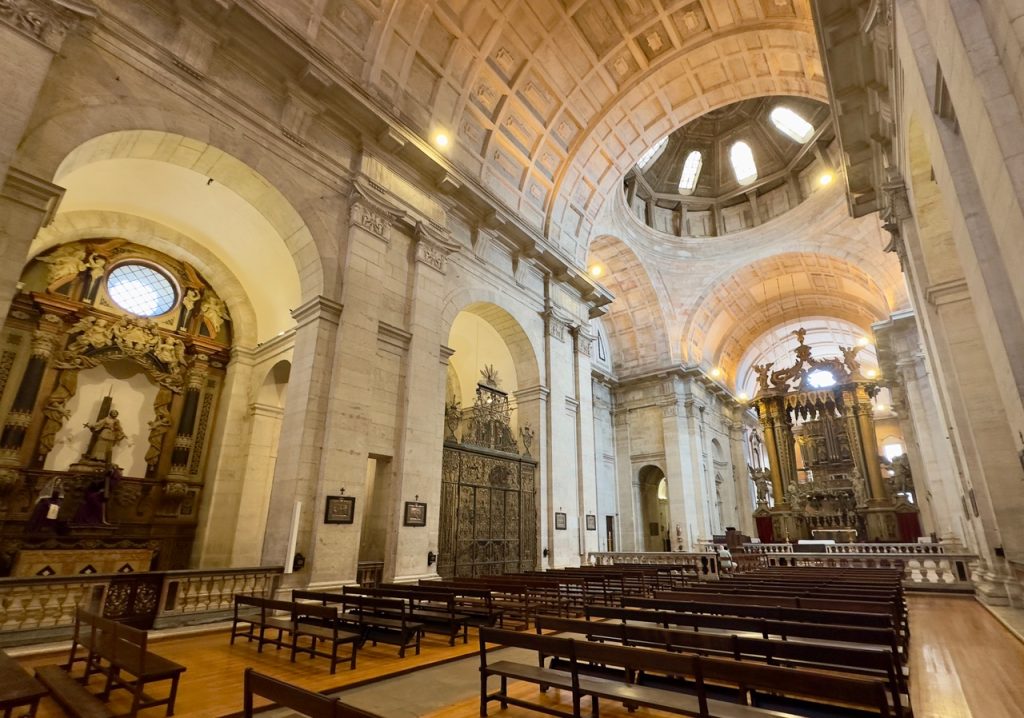
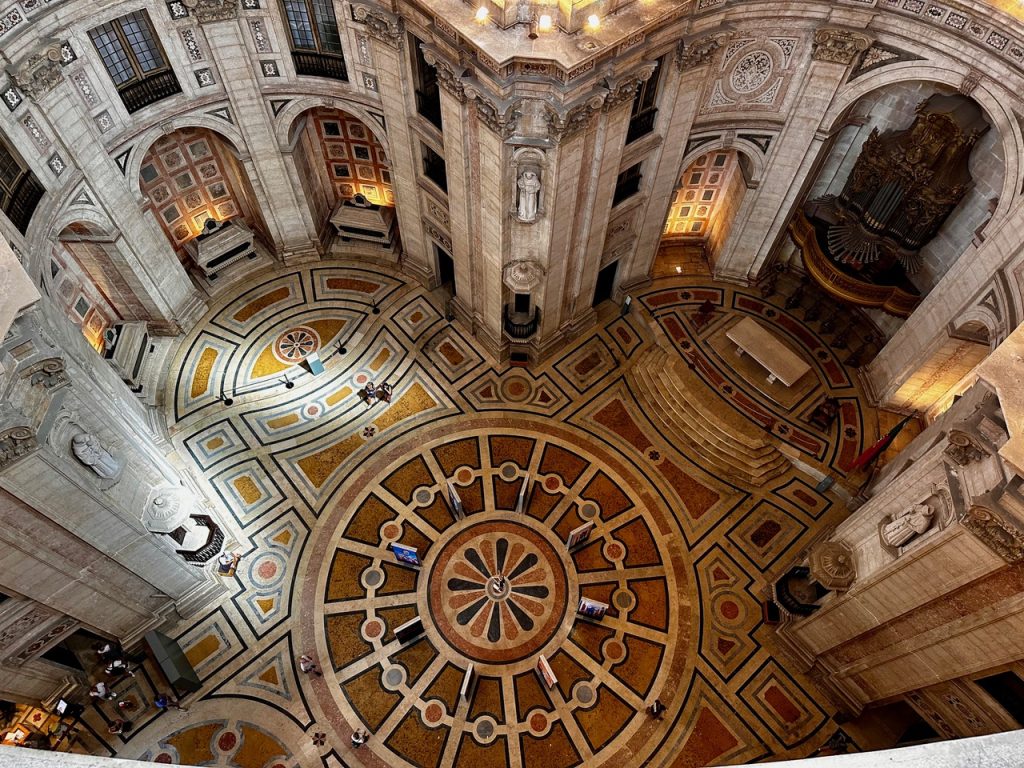
If you enjoy grand architecture, the National Pantheon is worth a visit. As you climb to each floor, the view changes of the soaring columns along the walls, the multicolored marble floors, and the double concrete dome. If you make it to the top, you are rewarded with a walkway just below the dome and another rooftop view of Lisbon.
Guided Food Tour
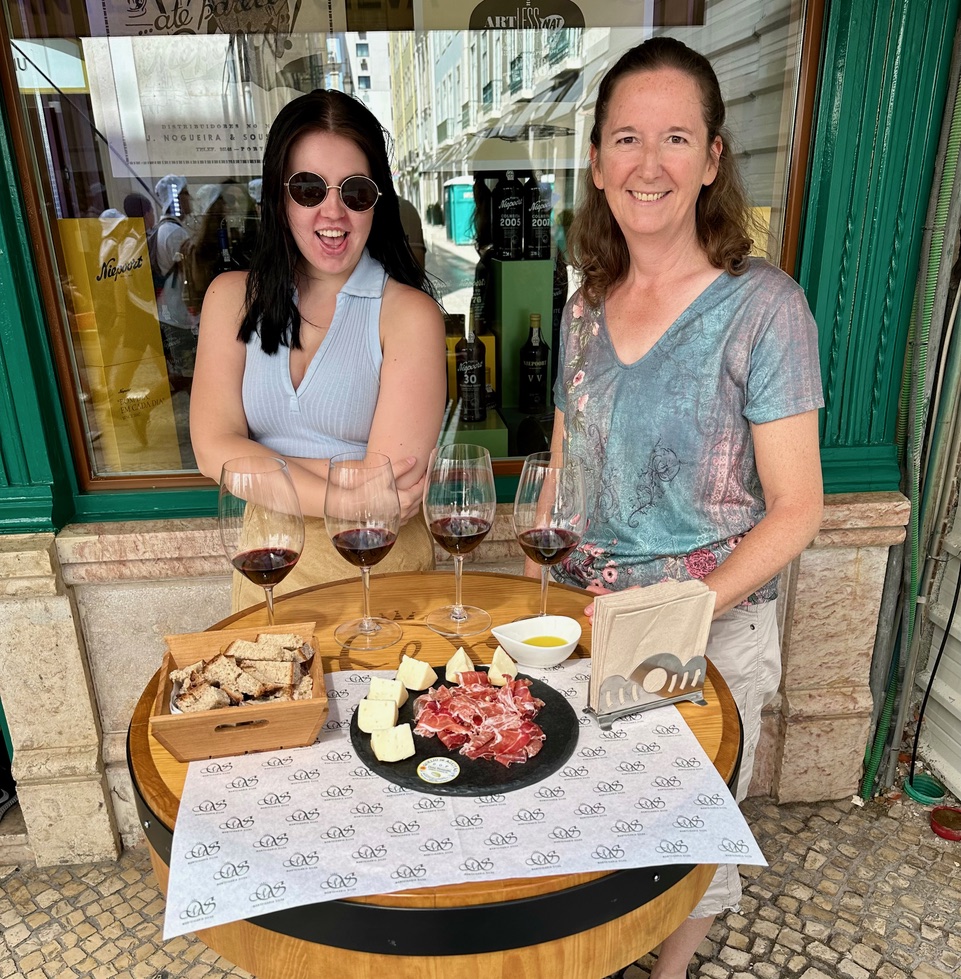
When I traveled to Lisbon for the first time, I booked a food tour to learn about local delicacies and some of the city’s history. The knowledgeable guide of our small group of eight led us through various neighborhoods and explained the dishes and drinks that we were sampling.
A small-group food tour gives visitors a basic overview of the city along with some local history and culture. You can also find good restaurants to return to during your travels.
Click here to book your food tour of Lisbon.
Explore the Lisbon Streets
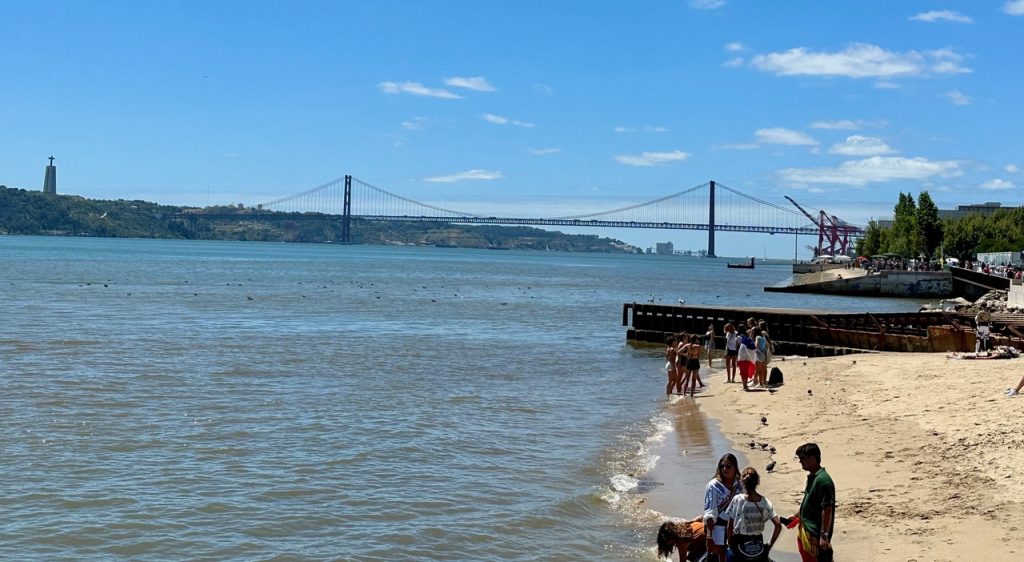
Work off all the calories from the food tour with a stroll through the central Baixa neighborhood of Lisbon. A small beach and concrete platform along the water’s edge give you a great view of the Tagus River. To the west, the 25th of April Bridge, named for the date of the Carnation Revolution in 1974, spans the river. Also in view, the Christ the King Statue towers 360 feet above the hill opposite the city.
Cross the street to the expansive Praço do Comércio, lined with restaurants with outdoor patios. Pass the statue of King Jose I and his horse Gentil to the Rua Augusta Arch, inaugurated in 1873 to commemorate the reconstruction of the city after the earthquake in 1755.
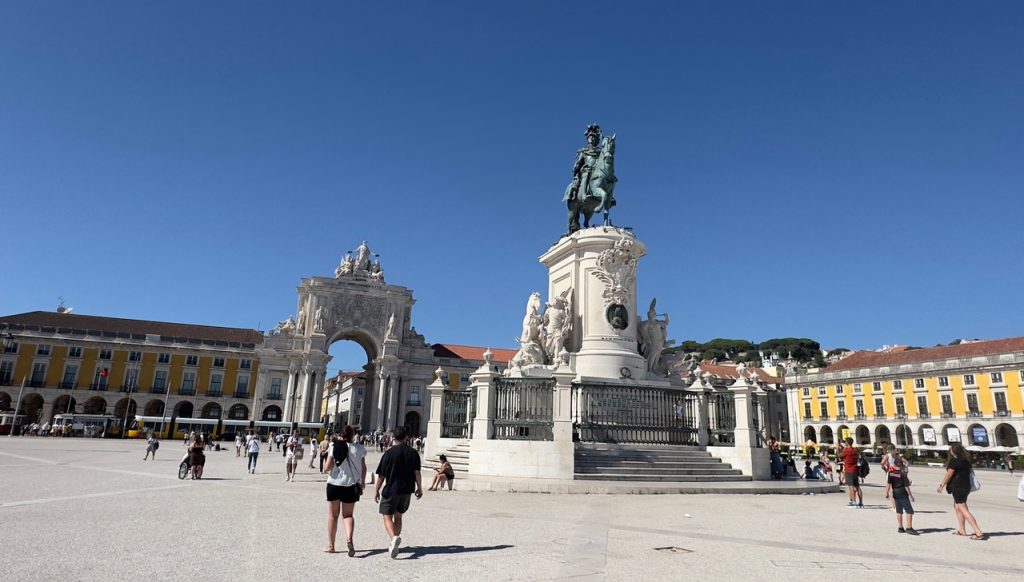
Rua Augusta
As you stroll up Rua Augusta, plenty of shops and restaurants offer a place to pick up a souvenir or snack. This pedestrian street, containing incredible patterns of hand-laid tiles, epitomizes the appeal of exploring Portuguese streets.
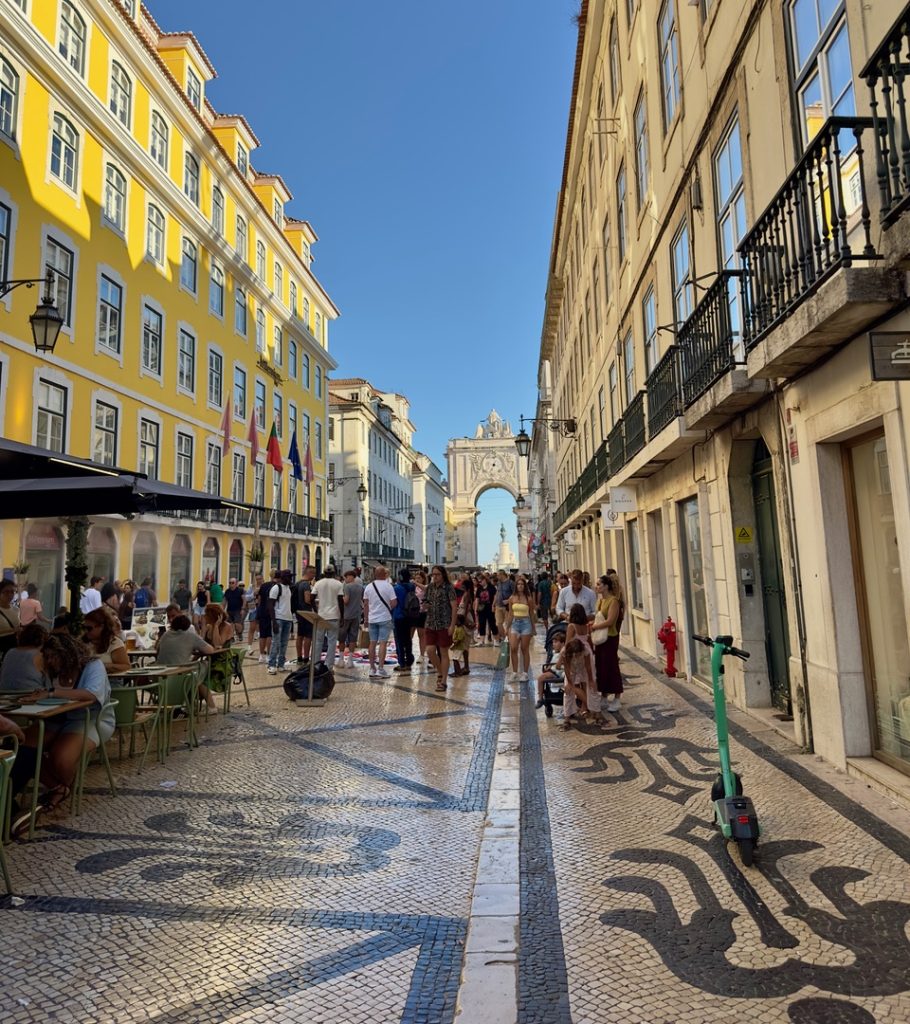
Rua Augusta ends at the rectangular Praça Dom Pedro IV, more commonly known as Rossio Square. Across the plaza, limestone and basalt tiles form long black-and-white waves.
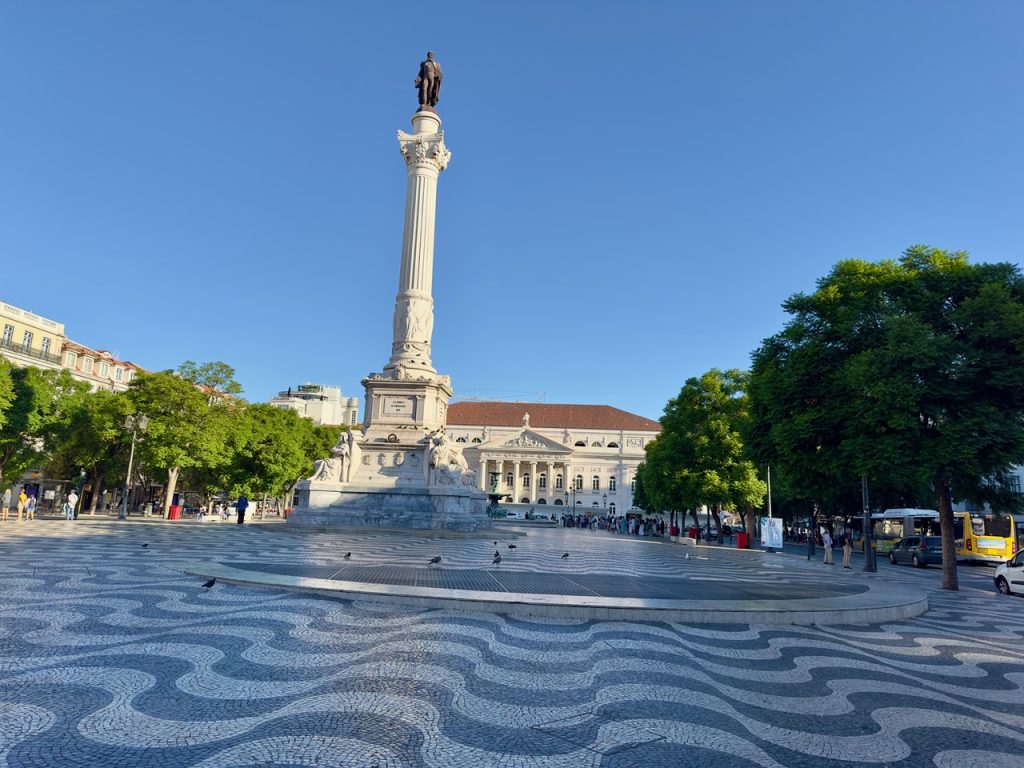
As you reach the Teatro Nacional Dona Maria II, turn to the right to sample ginja at A Ginjinha in São Domingos Square or at Ginjinha Sem Rival at the entrance to Rua das Portas de Santo Antão. Ginja is a popular cherry-flavored liquor served in a shot glass, often with an infused cherry at the bottom.
Book a walking tour of the Lisbon neighborhoods by clicking here.
Day Two of 3 Days in Lisbon
Dear Breakfast
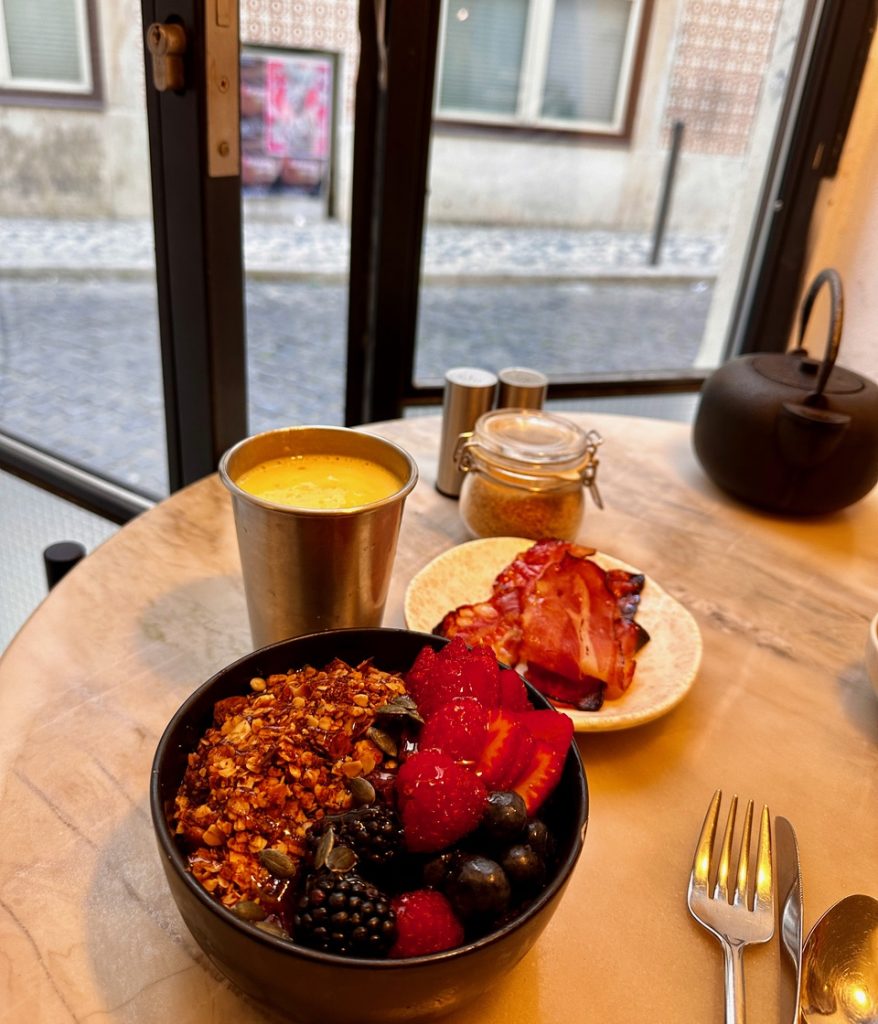
On your way to Belém, stop by Dear Breakfast in Chiado. I enjoyed an açai bowl with berries and pumpkin seeds and fresh juice. They offer many indulgent breakfast items such as caramel pancakes with peanut butter and chocolate nibs, along with a variety of pastries and smoothies.
Jump Aboard a Tram or Train to Belém
Belem is a district on the far western side of Lisbon. You can take a tram or train, or hail a ride-share to reach it. The 15E tram runs along the waterfront and is fun to ride, though it can get quite crowded.
You can also walk to the Cais Sodre station and catch the train towards Caiscais. Exit at the Belem stop and walk along the river to the Praça do Imperio. A pedestrian tunnel takes you across the train line.
Another option is to call for a Bolt car, ubiquitous in Lisbon, for the 15-minute ride.
Jerónimos Monastery
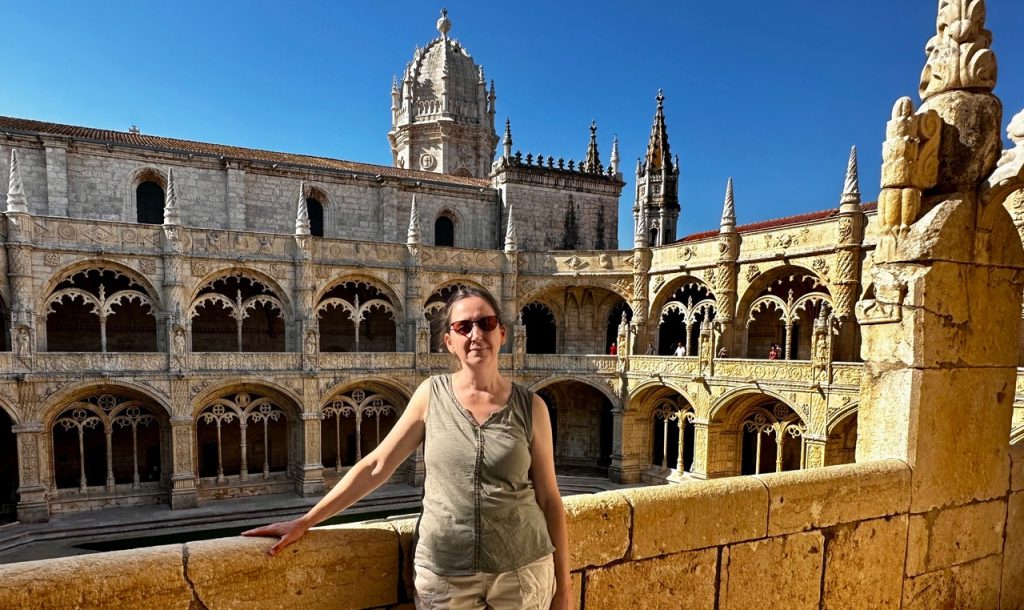
The Jerónimos Monastery features a lovely cloister with intricately designed columns and arches. The Manueline architecture of the early 16th century is elaborately displayed in the monastery and adjoining church.
Book your tickets in advance and choose the earliest time of the day to minimize your wait.
Purchase tickets and tours by clicking here.
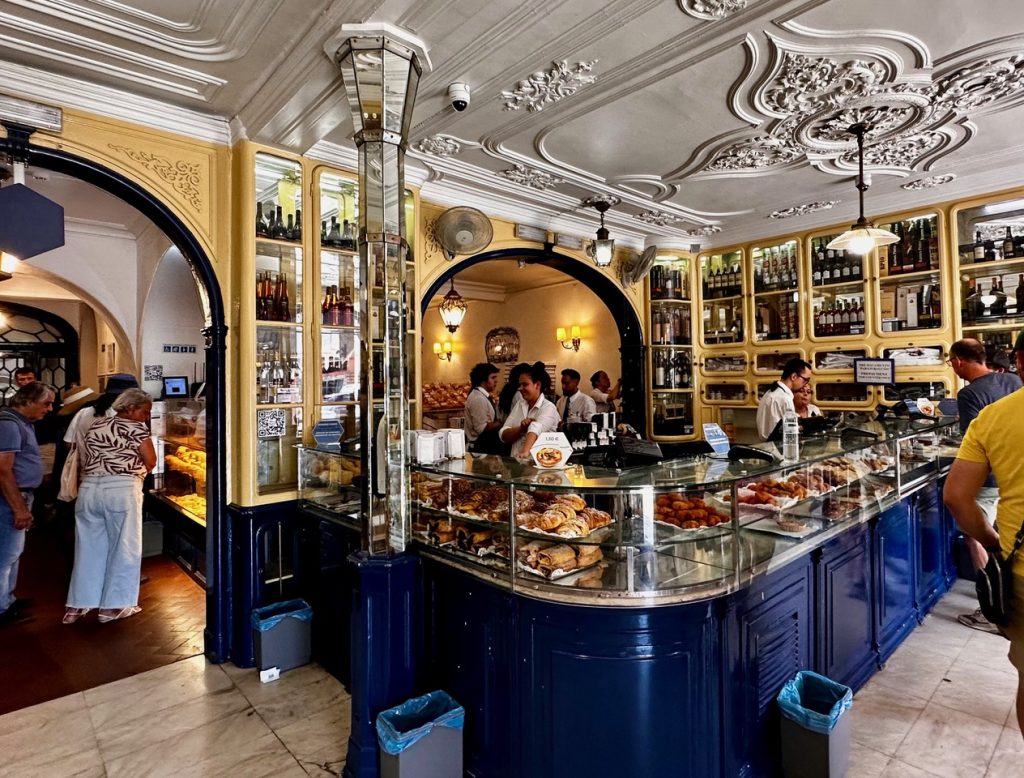
Pastel de Belém
Walk down Rua de Belém to sample the original pastel de nata at Pastéis de Belém. The bakery began in 1837, creating the custard treats using the ancient recipe from the monastery.
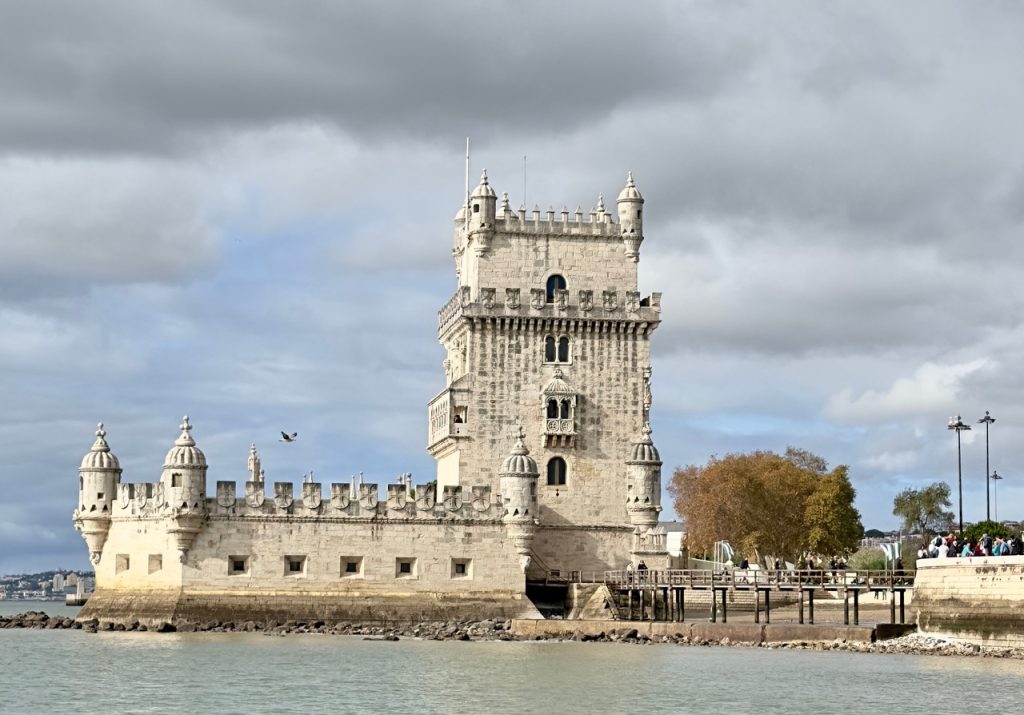
Belém Tower
Head back to the water to view another Manueline masterpiece, the Belém Tower. King Manuel I commissioned the tower in the early 1500s to protect the entrance to the Tagus River. Low, narrow windows allowed cannons to be shot towards any invading ships.
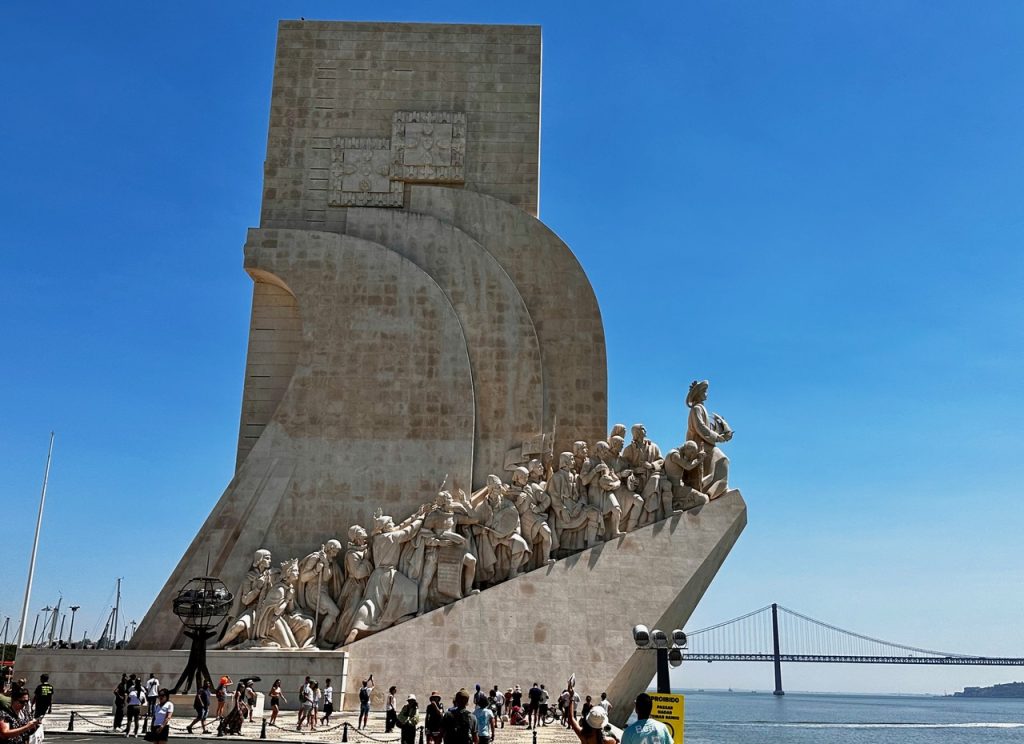
Monument to the Discoveries
Further along the river, the 170-foot-tall Monument to the Discoveries appears as a ship pointed to the water. Prince Henry the Navigator leads a line of explorers, scientists, and missionaries.
Ride the elevator to the observation deck for a stunning view of Belém and the Tagus River, with the hills of Lisbon beyond. You can also gaze down on the 160-foot-diameter mosaic marble compass given to Portugal by the Republic of South Africa.
Return to Rua de Belém for lunch at a variety of restaurants.
National Coach Museum
Continue down Rua de Belém to the National Coach Museum, a modern, warehouse-like space filled with coaches from the 16th to 19th centuries. Many of the vehicles come from the Portuguese Royal House. However, there is a wide range of types from simple open-air, two-seaters to elaborate royal transports adorned with gilded statues.

If time permits, duck into the original coach museum set up in the old riding ring, if only to see the architecture and décor.
Stroll Avenida da Liberdade
Travel back to the heart of Lisbon by the train to Cais do Sodré, then take the blue underground line to Rossio Station. Cross the Plaça dos Restauradores, then stroll up and down my favorite street, the Avenida da Liberdade.
Large, leafy jacaranda trees provide a dappled shade that accents the patterned tile sidewalks of this divided avenue. Stop at a kiosk for a snack or drink, and you are likely to find a street musician providing entertainment. If you prefer shopping, high-end options abound.
Dinner with a View
The hills of Lisbon ensure plenty of spots to dine with an incredible view, whether from a rooftop or patio at the top of a steep street. Some of my favorites include:
Vista do Castelo in the Barrio Alto above Rossio Station
Carmo Rooftop next to the top of the Elevador de Santa Justa
SEEN Sky Bar on Avenida da Liberdade
Park Rooftop on Calçada do Combro, reached by an elevator in a parking garage
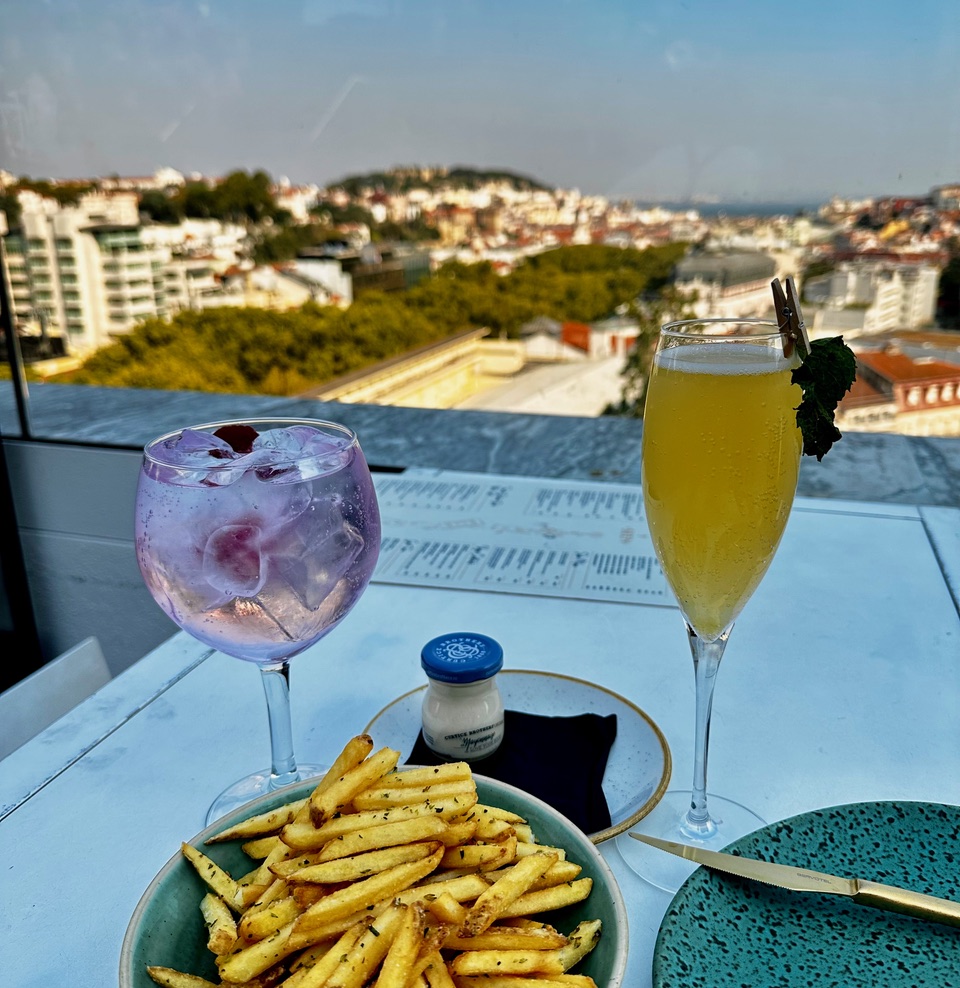
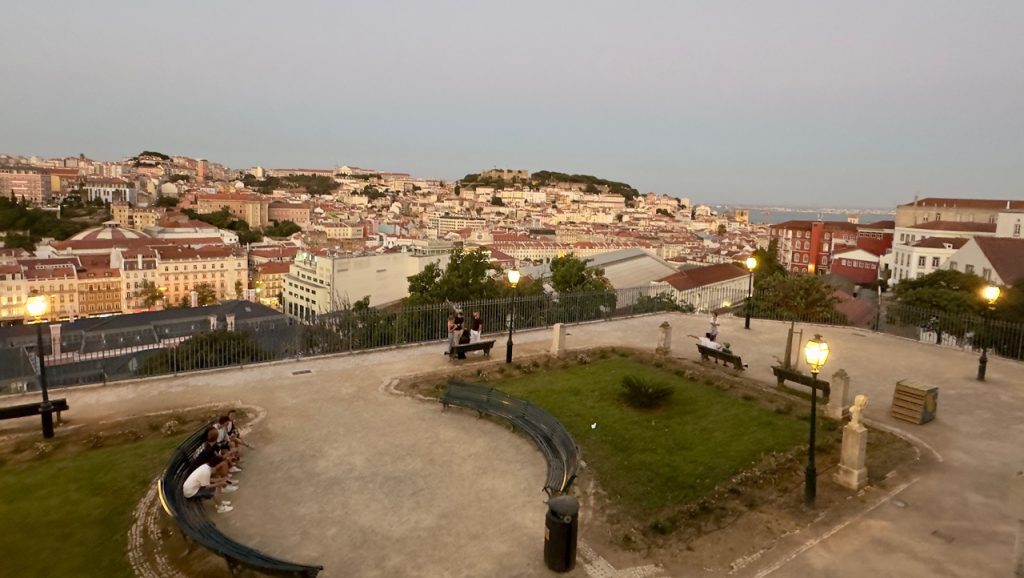
After dinner, conclude your evening with a stop at the Casa da Praia & Wine Bar across Rua Dom Pedro V from the Miradouro de São Pedro de Alcântara. After a glass of wine or two, rest on a bench at the Miradouro overlooking my favorite view in the world while listening to one of the guitarists who frequent the spot.
Day Three of 3 Days in Lisbon
Seventh for Breakfast
The Seventh restaurants in the Chiado neighborhood and up the street from Avenida de Liberdade offer a hearty start to your day. Choose pancakes with Nutella, dulce de leche, or lemon cream and apple jam; toast with salmon, buffalo mozzarella, or beetroot and hummus; or eggs styled as an English or Lisbon breakfast. Top this off with any variety of coffee drinks, tea, or fresh juice.
Morning of Art
Lisbon offers two incredible art museums to explore. If your taste in art leans toward historical classics, including Egyptian, Greco-Roman, Asian, and Western art, head to the Calouste Gulbenkian Museum on the north side of the city. However, if you prefer contemporary art in a stunning architectural space, check out the Museum of Art, Architecture and Technology on the bank of the Tagus River.
Calouste Gulbenkian Museum with Lunch on the Patio
The Calouste Gulbenkian Museum offers an inspiring mix of paintings, sculptures, and furnishings while inhabiting a space that is not overwhelming. During the early 20th century, Gulbenkian collected around 6000 works of art spanning from ancient to contemporary periods and from around the world. After his death, a museum was established in his adopted country of Portugal.

A lovely garden provides the opportunity to indulge in the beauty and peace of nature. Enjoy a healthy lunch on the museum’s patio overlooking the garden.
Museum of Art, Architecture and Technology Museum with Lunch at LX Factory
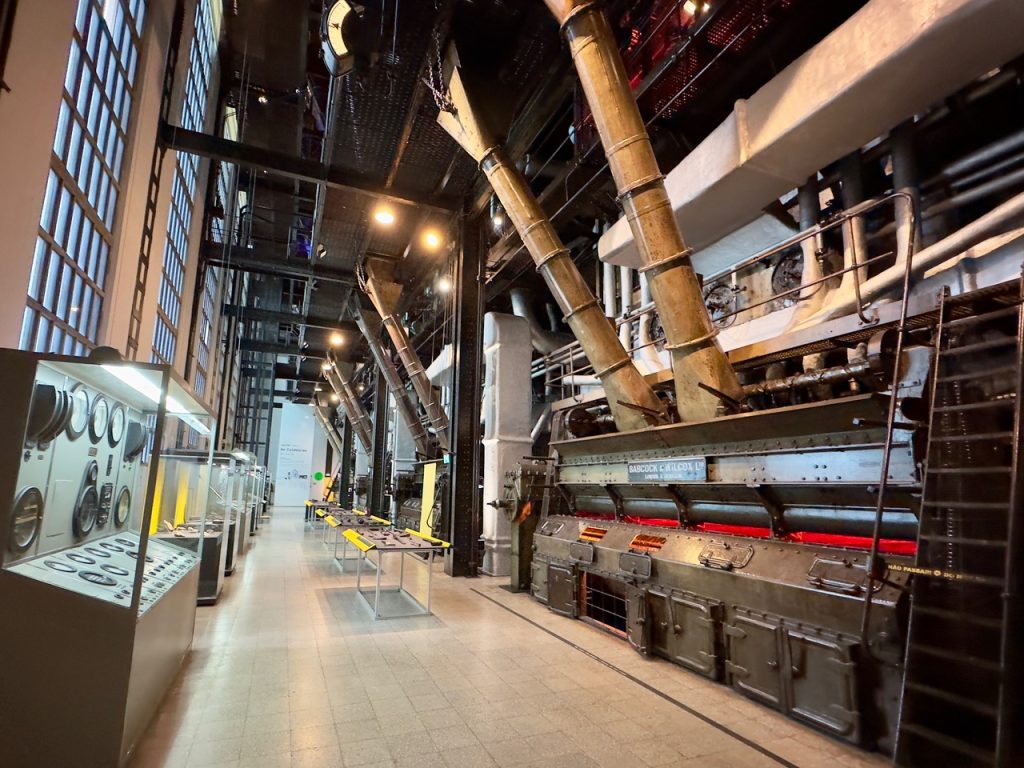
Part of the Museum of Art, Architecture and Technology Museum occupies a power station that operated between the 1910s and 1970s. In 1990, it opened to the public as an electricity museum, and visitors can still learn about the technology in its exhibits.
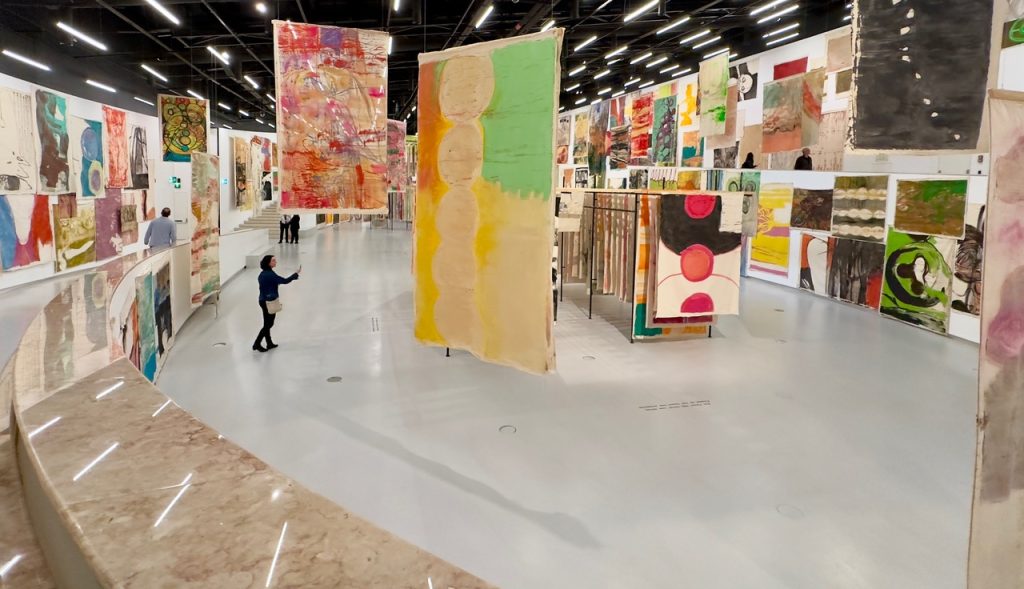
In 2016, an elegant, sweeping building was constructed as a contemporary art gallery. The central space is a vast oval with sloping walkways down to the ground level. Temporary, rotating exhibits provide a new experience each visit.
A garden provides stunning views of the river, the 25 of April Bridge, and the hills of Lisbon.
Lx Factory
Two kilometers up the river lies the LX Factory, a former textile factory turned entertainment space. Grab lunch at one of the several restaurants offering a variety of cuisine, then browse the shops.

You can reach the LX Factory by bus, train, or ride share. However, if it is a nice day, the walk along the riverfront is quite enjoyable.
Enjoy Lisbon’s Views and Vibes
Spend the afternoon exploring the streets and plazas of Lisbon’s neighborhoods and gazing out over the terra cotta roofs and pastel buildings from one of the many viewpoints, called miradouros.
One of my favorite views in the world is from the Miradouro de São Pedro de Alcântara in the Barrio Alto neighborhood. From this point, you can see the Castelo São Jorge perched on the opposite hill with the Tagus River in the background. The park at this miradouro is typically lively but not overcrowded, and a street musician usually provides entertainment. The kiosk has mediocre food and service, but the view is worth hanging out for a bit.

More Views
Two others worth checking out are the Miradouro de Senhora do Monte, the highest point in the city, and the Miradouro de Santa Luzia, with a blue-tiled portico and flowers.
Check out my article Best Views in Lisbon, City of Hills to learn more.
The Santa Justa lift is an ornate steel structure that serves as an elevator to reach the Barrio Alto. I have never waited in the typically long line for the ride since you can reach the observation deck from the street behind the Museu Arqueológico do Carmo (worth a stop if you have time).
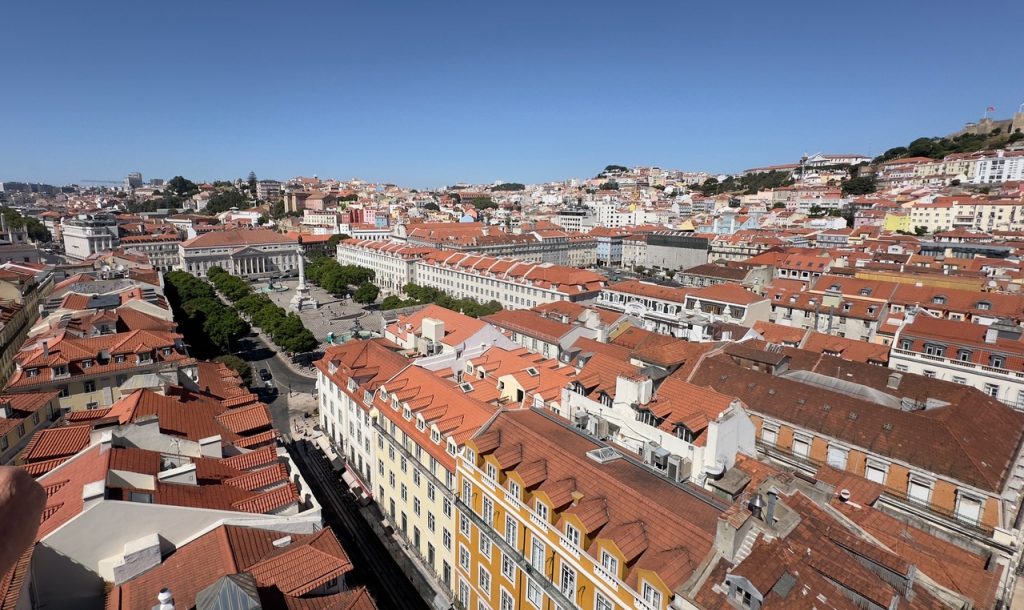
Wandering the Barrio Alto, Chiado, and Baixa neighborhoods offers plenty of shopping and dining options. Linger on a patio with a drink or snack while people watching and listening to local musicians.
Armazens do Chiado is a shopping mall in the heart of the city with public restrooms. Rua Augusta offers many souvenir shops and opportunities for buying local specialties such as pastel de nata and sardines.
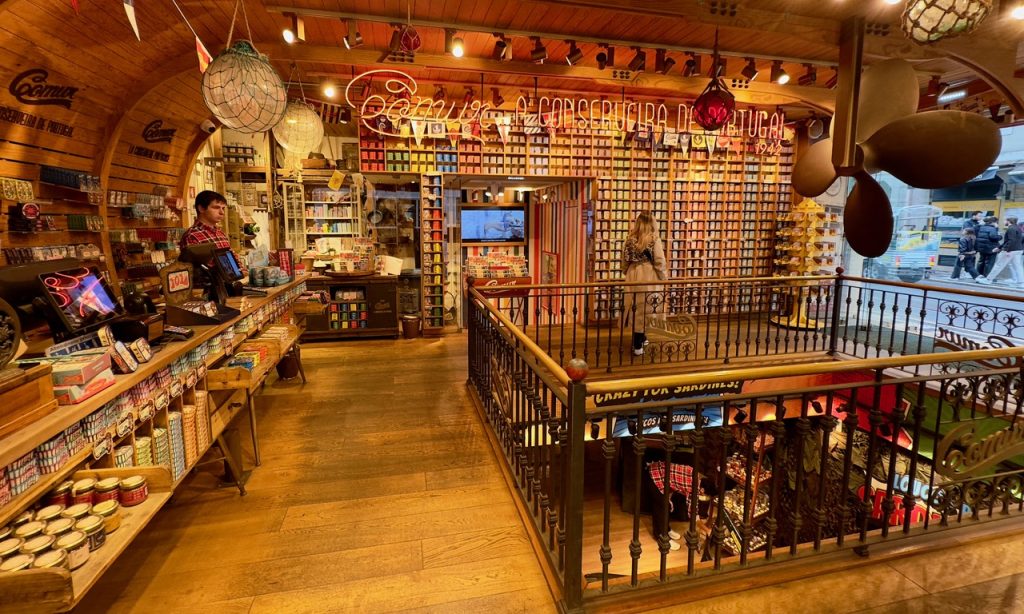
On every visit, I make sure to buy something to read at Livraria Bertrand, the oldest operating bookstore in the world, founded in 1732. Each book gets stamped to authenticate that you bought it there.
Local Fado Performance
Fado, Portugal’s national music, evokes passion, sadness, and love. Many places around Lisbon offer Fado as concerts or as accompaniment to dinner.
Lisboa em Fado in Chiado presents an hour-long show with descriptions of each song and the history of fado. I enjoyed learning about the music and how it is entwined with Portuguese culture. The ticket included a toast of port.

Bonus Day: Visit Sintra’s Palaces
If you have an extra day in the area, spend a day exploring the palaces and landscapes of Sintra. The train ride from Rossio to Sintra Station takes about 50 minutes and usually runs on schedule. You can drive there, but the train is much easier as the roads become very crowded.
From the station, the walk into the center of town takes 10-15 minutes. I recommend getting to town early to eat breakfast at one of the many small restaurants. You can then hail a ride share to your first destination.
There is a bus that starts at the train station and winds past many of the sights, which I rode on my first visit. However, there tends to be a line, and the price of a car is worth the convenience. You can also splurge on a tuk-tuk to enjoy the lush scenery along the way.
Depending on your comfort with crowds and desire to be in nature, start your day with either the Pena Palace and Moorish Castle or the Park and Palace of Monserrat.
National Palace of Pena
The top tourist sight in Sintra is the fairytale-like Pena Palace. Bright yellow and red turrets, elegant arches, and ornate stonework adorn a castle perched at the top of a hill. The interior rooms reflect the 16th-century monastery and the Romantic era renovations by Ferdinand II in the 19th century.
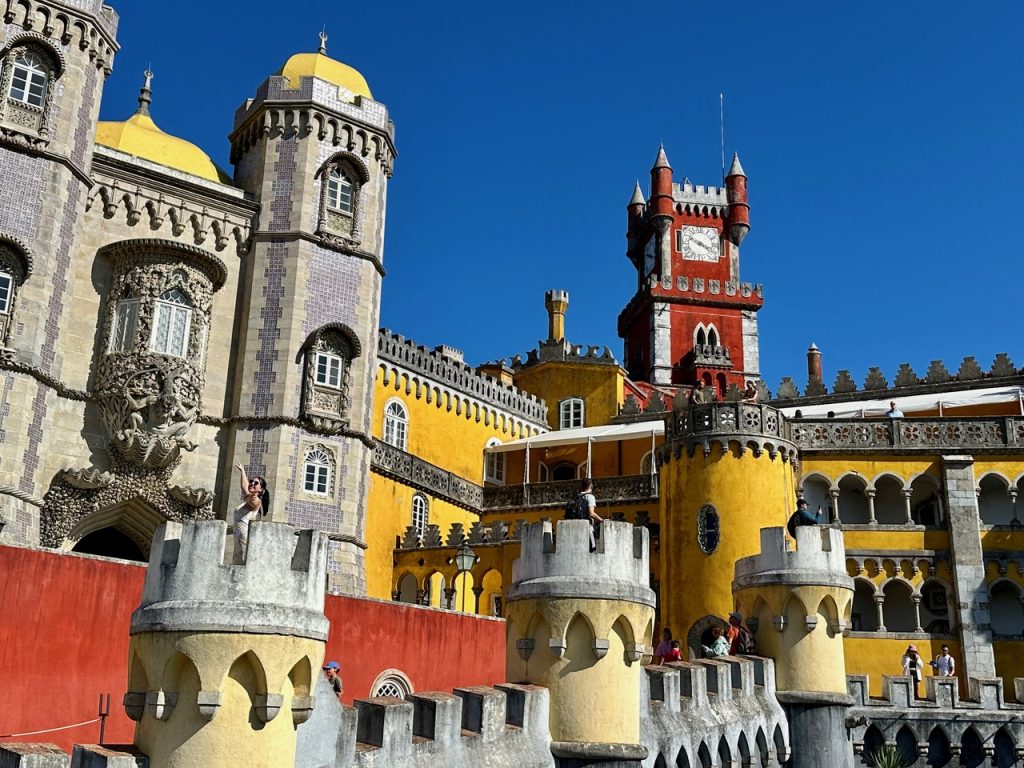
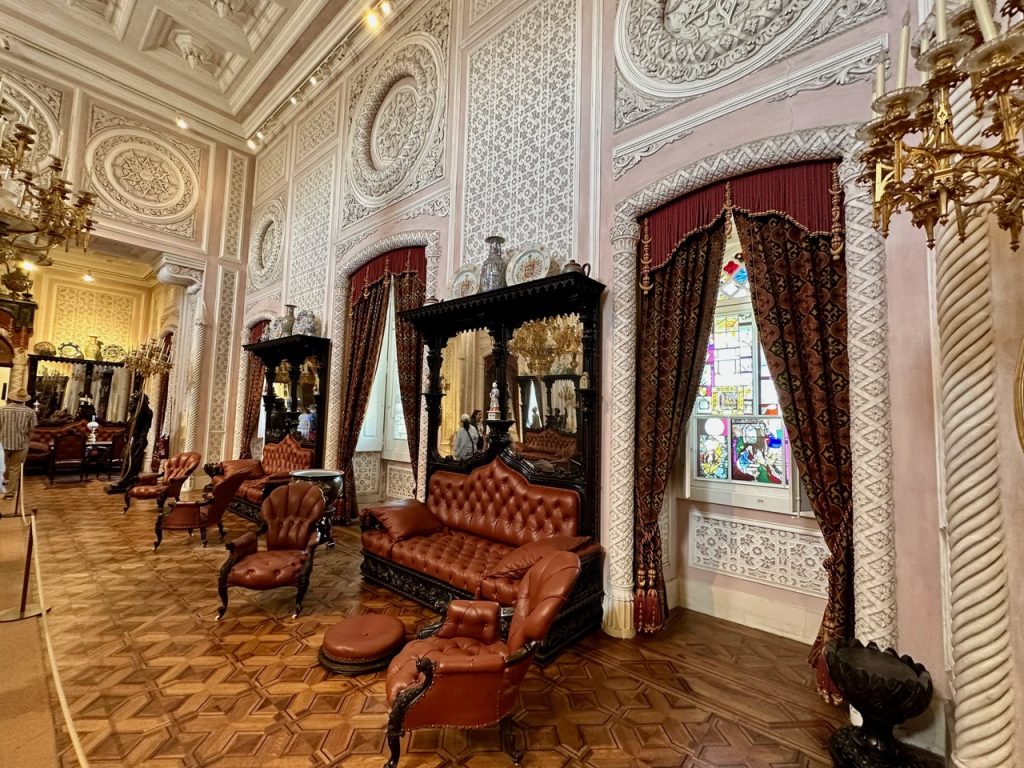
Purchase tickets in advance for the first possible entrance of the day. The palace will become very crowded as the day progresses. Queue up early for the interior tour as well, which is well worth the visit.
Make it easier to see all the sights in Sintra by booking a tour here.
Moorish Castle
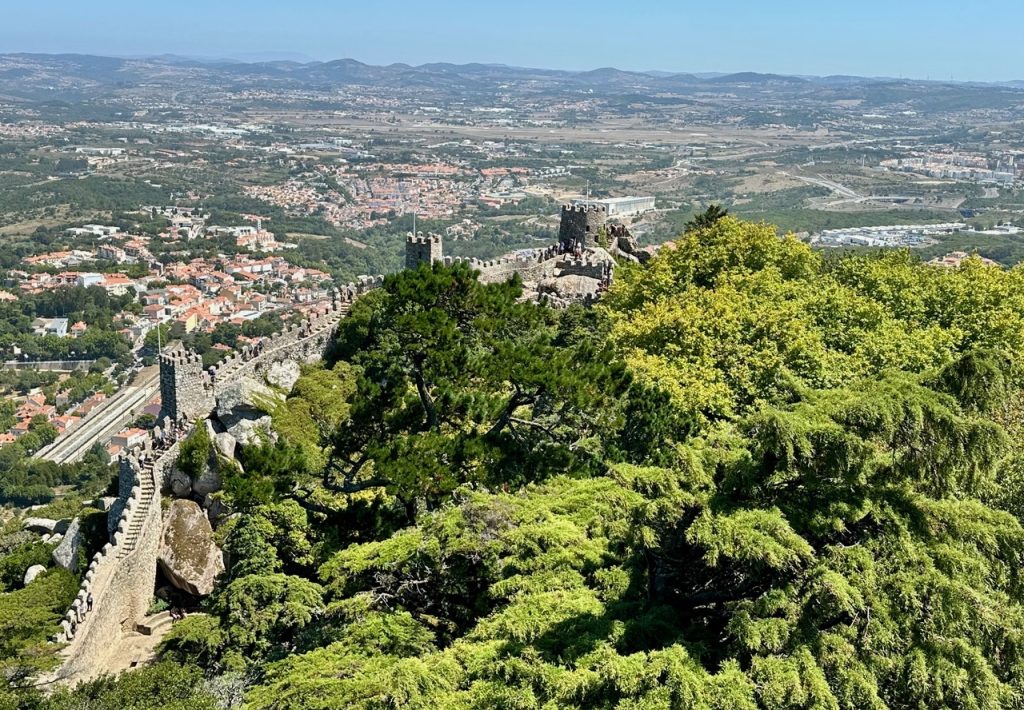
Walk about 15 minutes along Estrada da Pena to the Moorish Castle. The 10th-century ruins from the occupation of the Moors of this area are fun to explore. The amazing views from the walls extend over Sintra and the surrounding countryside. The steps are steep and irregular but worth the climb to the top tower.
Lunch in Town
Return to town by walking 10-15 minutes down Calçada dos Clérigos and choose a restaurant for lunch. My daughter and I enjoyed the relaxed atmosphere and fresh food at Pizzeria do Carmo.
Monserrat Palace and Garden as Alternative Morning Excursion
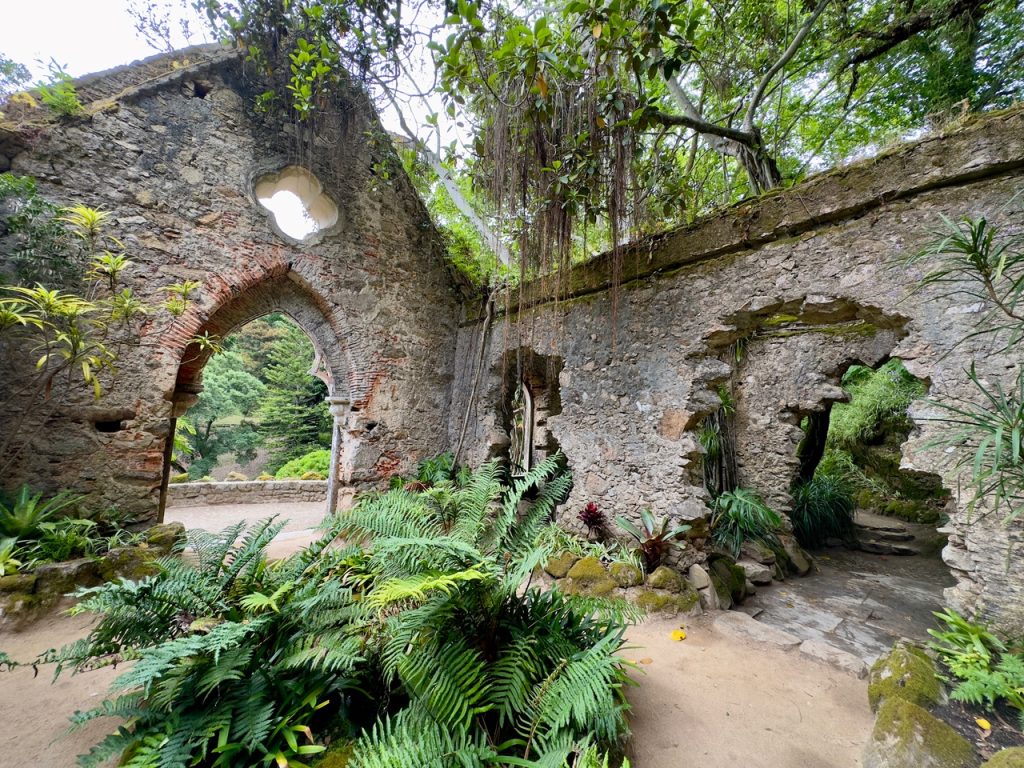
If you would prefer a quieter, natural space to spend the morning, visit the gorgeous grounds of the Monserrat Palace. The five hours I spent wandering through each special section of the gardens endeared this to me as my favorite sight in Sintra.
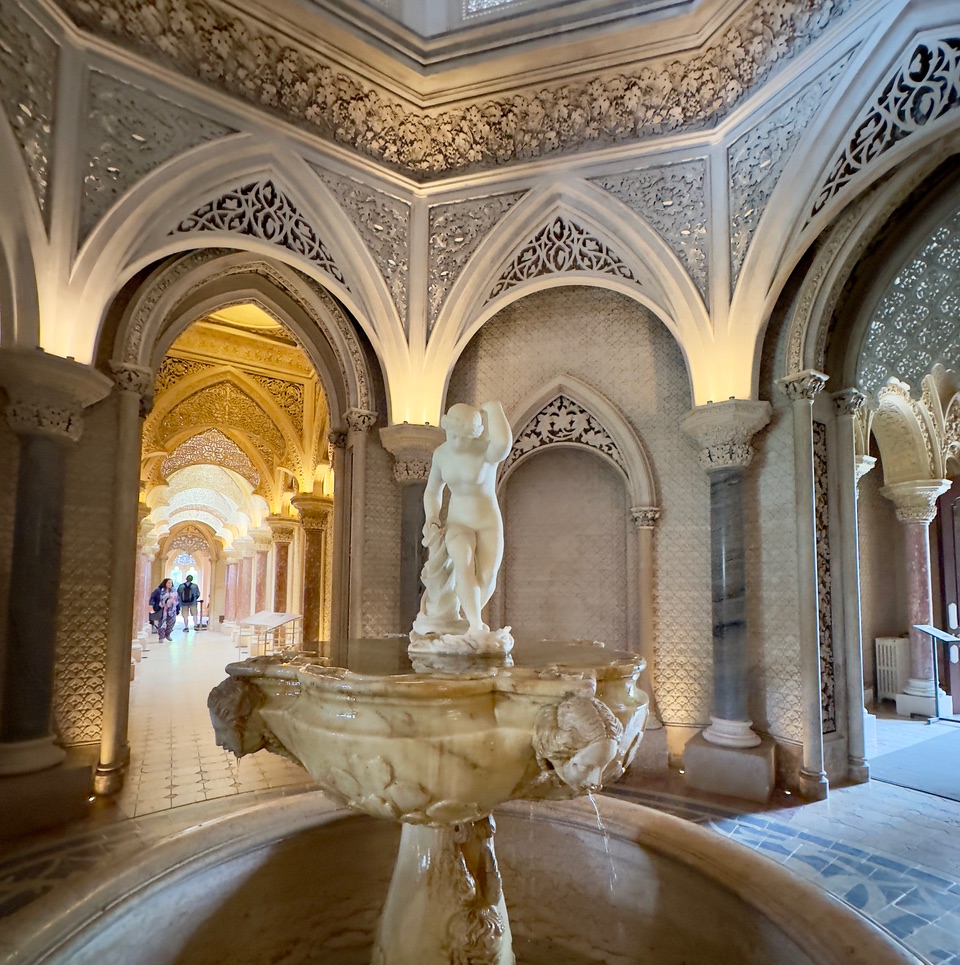
Enter along a path filled with lush ferns past a waterfall and moss-covered stone. Wander among ethereal chapel ruins and alongside a tranquil lily pond. Explore the extravagant Gothic and Arabesque architecture of the palace built by Frances Cook, a British industrialist and art collector.
A shady terrace offers a peaceful place to have lunch from the Tea House.
Quinta da Regaleira
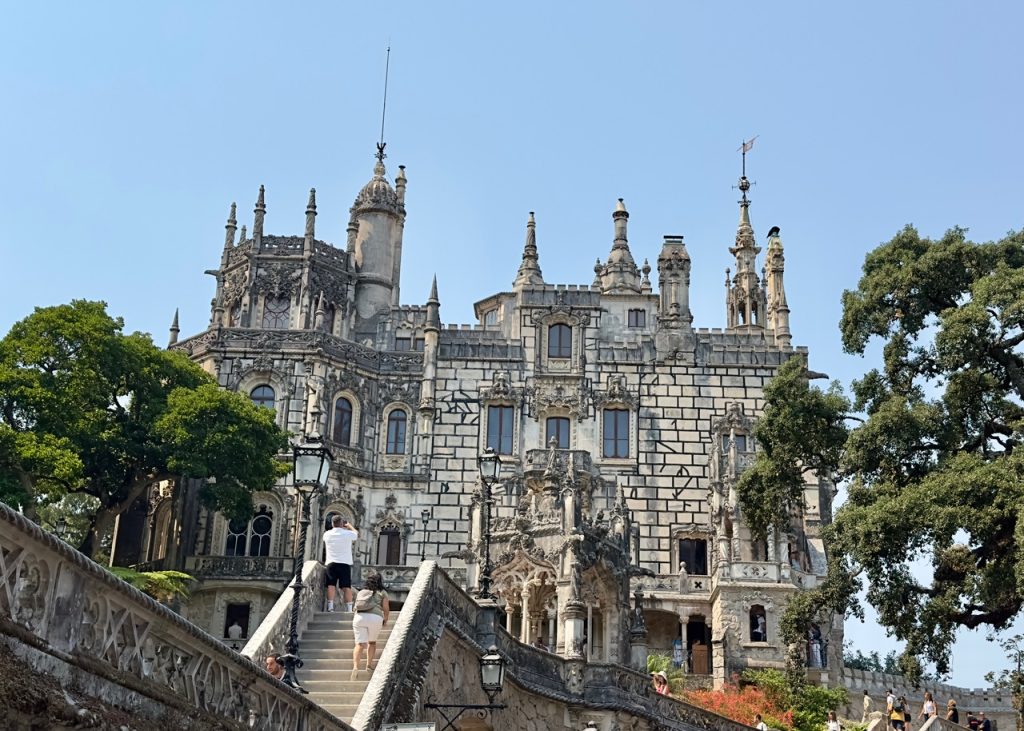
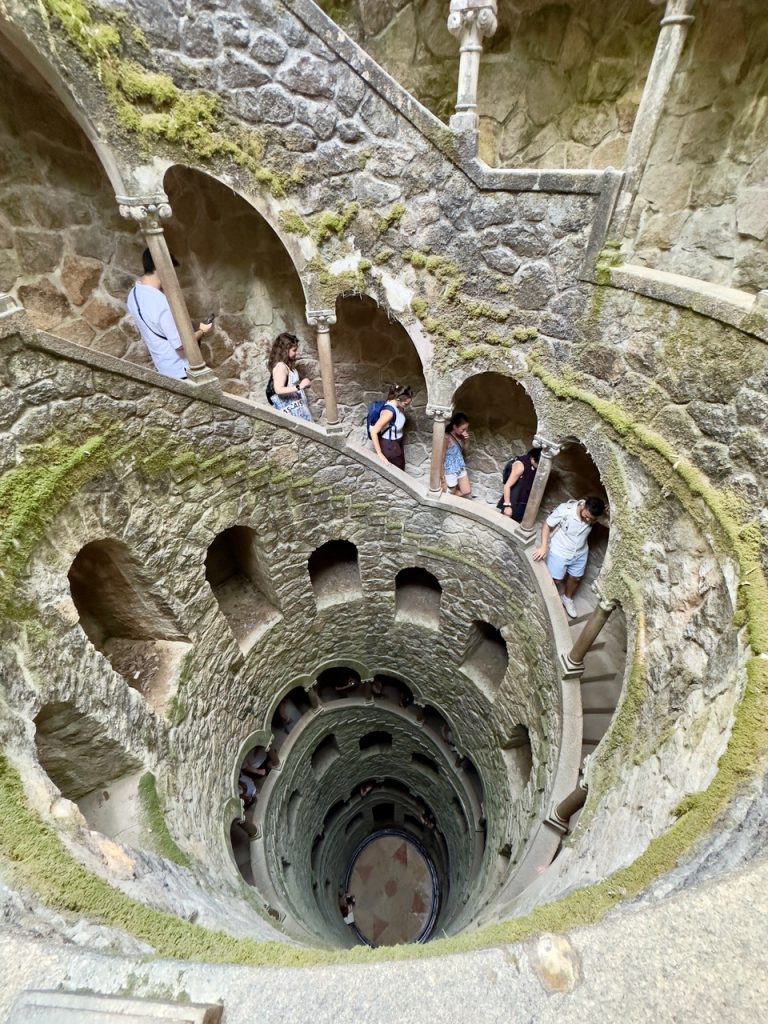
A 15-minute walk from the center of town brings you to Quinta da Regaleira, an enchanting garden of mysticism and surprising finds. A descent down a spiraling well brings you to a hidden grotto. A venture into a cave leads to an underground pool. A medieval castle roosts within a thicket of shady trees. Intriguing paths lead to sculptures and fountains. And an ornate Manueline palace overlooks all of this.
Stop by the café for an afternoon snack.
National Palace of Sintra
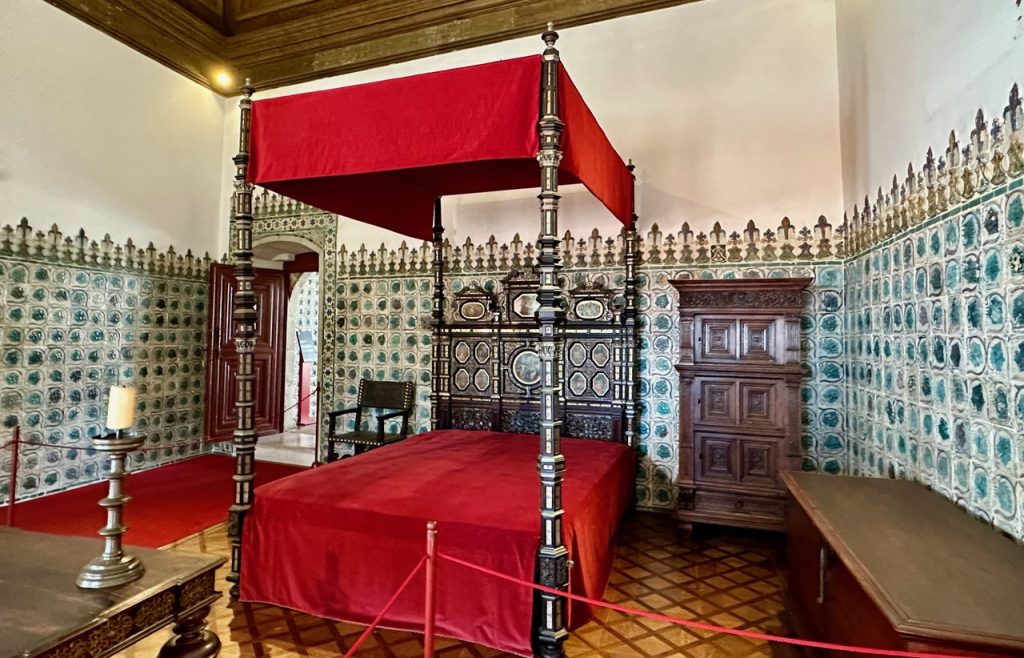
If you still have time and energy, tour the National Palace of Sintra on your way back to the train station. This palace, first occupied in the 10th century during Moorish rule, was visited by the kings and queens of Portugal over the centuries. They renovated the architecture and décor in the style of the times, with the main work completed during the 16th century.
If you love tiled walls and painted ceilings as much as I do, you will relish the many patterns and depictions throughout the rooms. A balcony with columns and arches offers a beautiful view of Sintra’s colorful buildings. An expansive kitchen demonstrates how many staff provided for the royal family.
National Palace of Queluz
If you do not have an entire day to spend visiting the palaces in central Sintra, you can still get a taste of the lives of the Portuguese royalty at the National Palace of Queluz. The train ride from Rossio Station is less than 20 minutes, followed by a 15-minute walk.
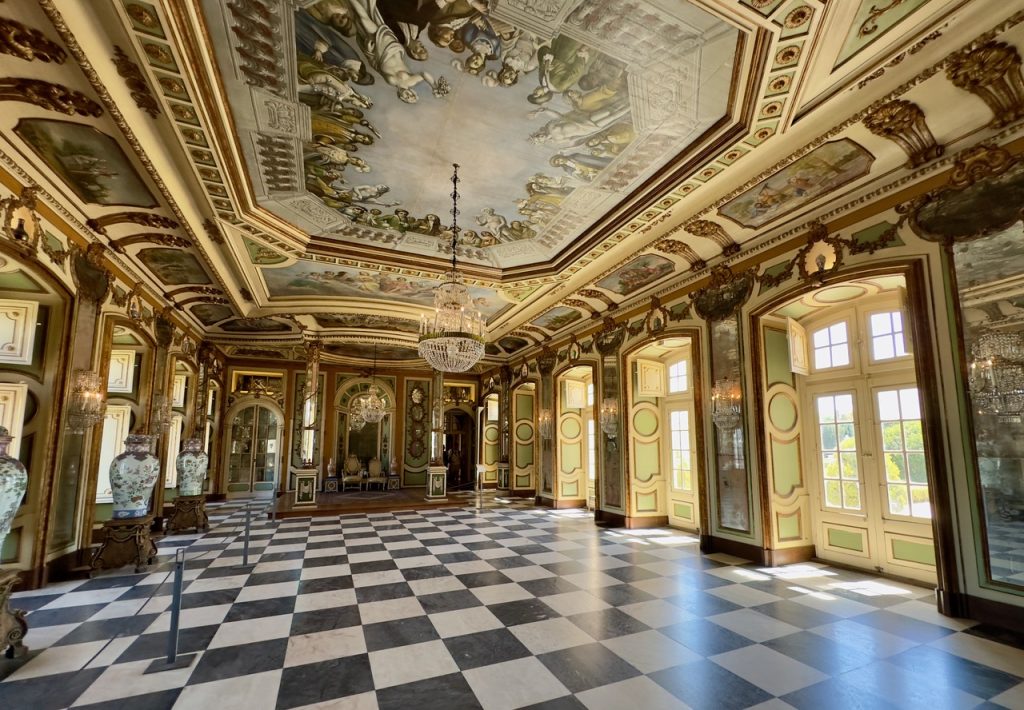
Mainly built in the mid-1500s, this property served as a recreational space for the court of Portugal. Opulent décor adorns the walls and ceilings with chandeliers and furniture to match. A stunning ballroom is lined with mirrors and gold accents.
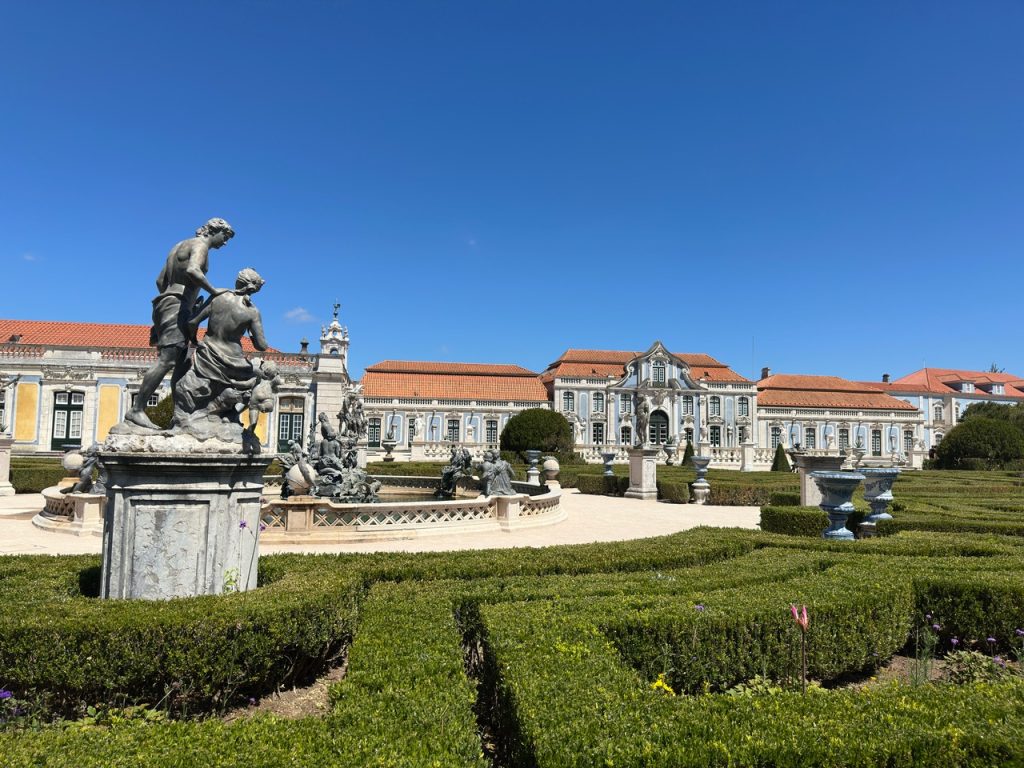
Extensive grounds begin with a neoclassical formal garden and radiate towards shady paths and fountains. On the day that I visited, I practically had the grounds to myself and easily imagined strolling my land as queen.
Conclusion
The best three days in Lisbon for first-time visitors include visiting art museums, churches, and viewpoints. Take time to explore the city and the distinctive architecture, food, and street life.
For more recommendations about traveling to Lisbon, check out
Solo Travel in Lisbon: Your Ultimate Guide
Best Views in Lisbon, City of Hills
If you want to experience more of Portugal, check out
