Enjoy Sintra, Portugal Without the Crowds
Want to spend a relaxing day in Sintra exploring palaces and nature?
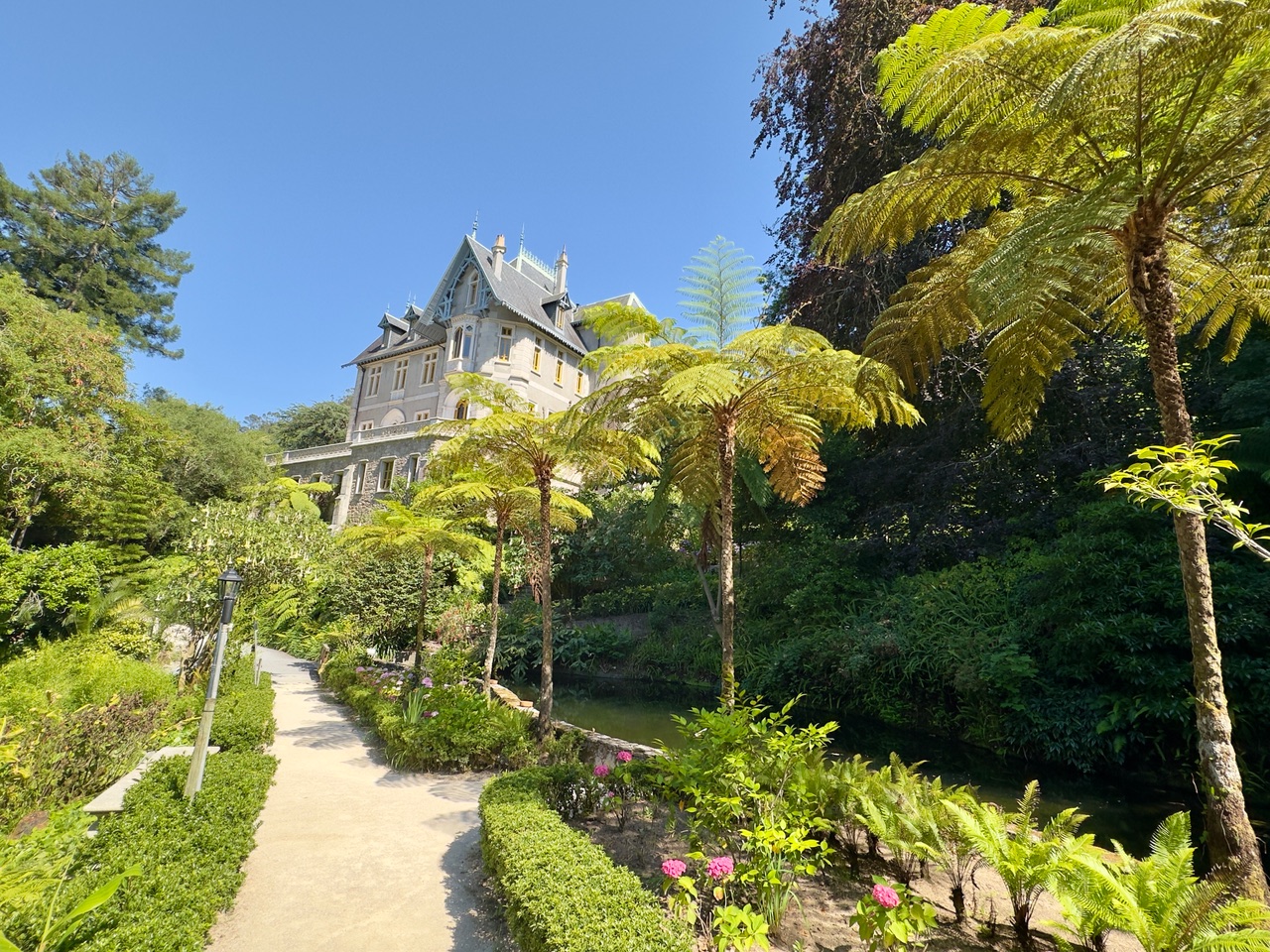
To better enjoy Portugal’s popular city of palaces, try Sintra without the crowds at two incredible sights. When tourists plan a day trip from Lisbon to this nearby town, Monserrate Palace and Park and Biester Park are typically lower down the list of sites to visit. However, both have exquisite palaces and gorgeous grounds.
I will admit I did not choose these places on my first trip to Sintra. My daughter and I visited Pena Palace, the Moorish Castle, and Quinta da Regaleira, seemingly along with every other tourist in Portugal. On my next solo trip to Lisbon, I spent over four hours at Monserrate and fell in love. On my most recent visit, I had to return to this park, and I also decided to check out Biester Palace. The palace’s décor and furnishings captivated me, and I wanted to move in at once.

Both sights offered beauty and tranquility in the structures and natural features. I frequently enjoyed areas of the parks and palaces completely alone. In mid-June, I encountered less than 25 people during my time at Monserrate and less than ten people at Biester. While they may not be quite as spectacular as the more popular Sintra sights, I recommend considering these two parks and palaces. You can enjoy spectacular nature and incredible craftsmanship at a leisurely pace.
Park and Palace of Monserrate
Following three centuries of construction, renovation, and deterioration, Francis Cook bought the lands of Monserrate in 1863. A British trader and art collector, Cook brought a vision of Romanticism to this landscape. He created stunning grounds filled with native and international plants and commissioned an ornate palace that combined Indian and Gothic styles.
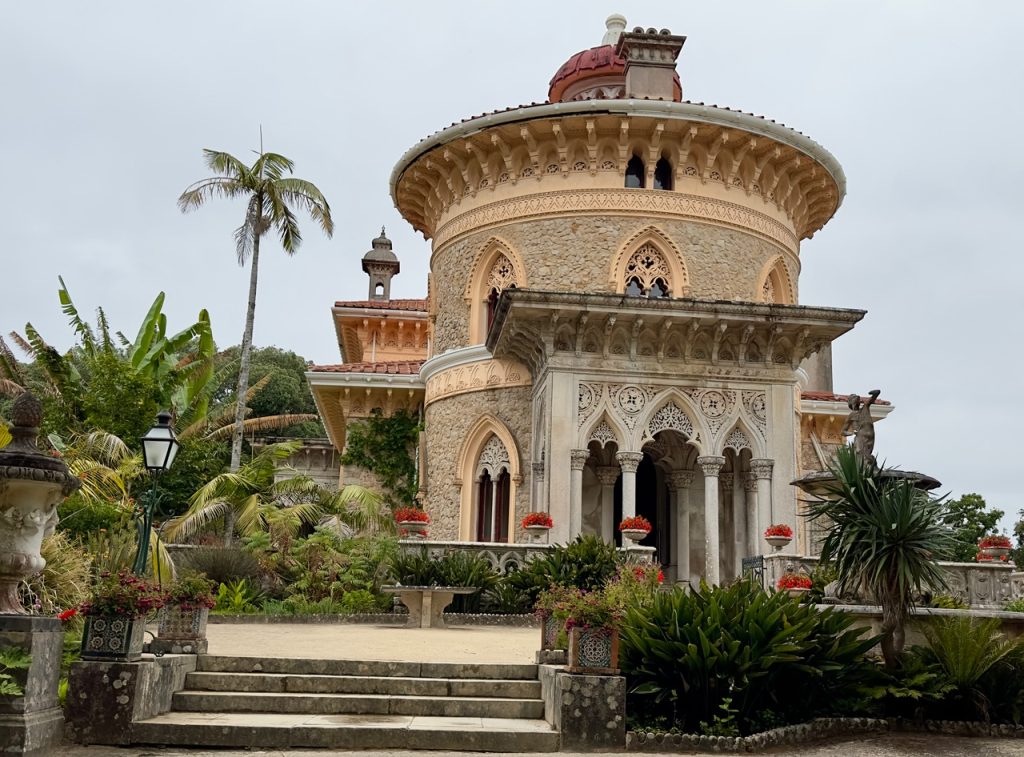
The Portuguese government acquired the park in 1949. It later became part of the Cultural Landscape of Sintra, a UNESCO World Heritage site, in 1995. Today, the park is open to visitors to explore the gardens and admire the palace.
The palace sits on a hill with beautiful views of Sintra. Visitors can walk through both floors and read about the history of Monserrate. Although little furniture inhabits the former home, the architecture and décor are exquisite. Pointed arches, elegant columns, and intricately textured walls rival any art museum.

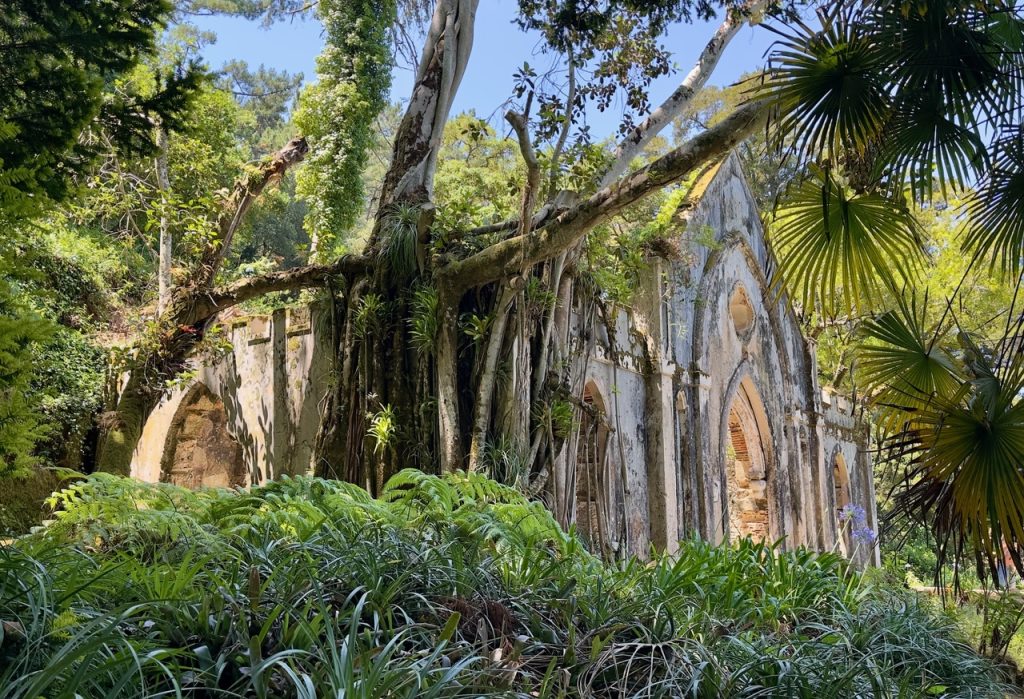
Several gardens delight with various themes, such as the Japanese Garden, Fern Valley, and the Great Lawn. My favorite spots include a chapel ruin enmeshed in vines and tree trunks, a secluded waterfall, and the shaded pond. Intertwining paths offer many intriguing journeys.
A café offers a light lunch, snacks, and drinks. Restrooms are available at the café and other spots in the park.
How to Get There
The best way to travel from Lisbon to the Sintra city center is the regional train from Entrecampos station, which takes about 45 minutes. You can drive, but traffic within Sintra can be difficult to navigate.
From the center of Sintra, you can take the 435 bus, which stops next to the train station and circulates past the major tourist sites. You can also take a taxi or hire a car near the station. I prefer to walk up the street and use the Bolt or Uber app to call a car. Hiring a tuktuk can be fun on a warm, sunny day.
Biester Palace
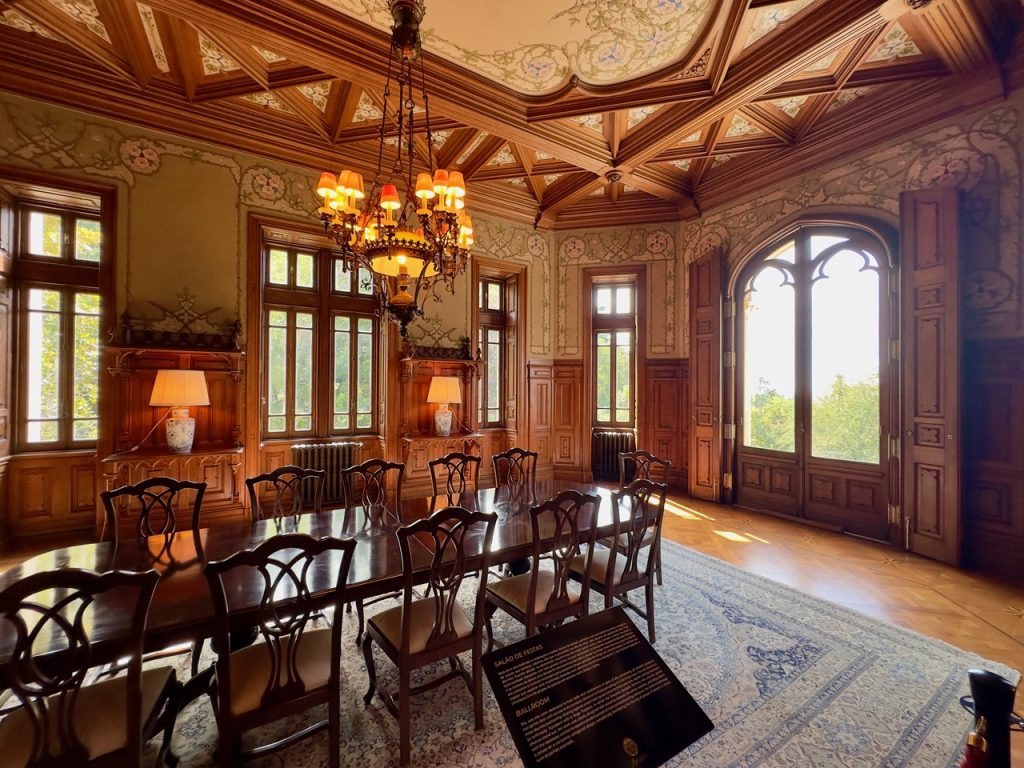
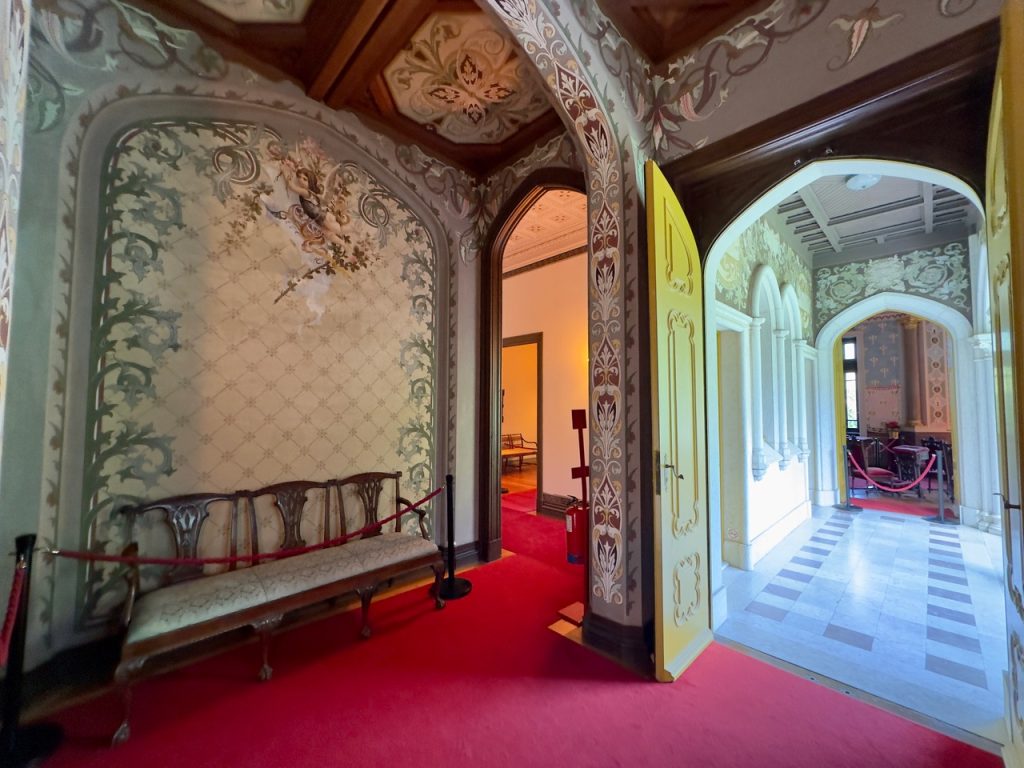
Biester Palace takes the Romantic style of late 19th-century Sintra and pushes it into Art Nouveau. The gardens matched the natural beauty of the area, but the palace’s interior stunned me. The intricate artistry of the woodwork, fireplaces, wall coverings, and furnishings rival neighboring sights.
Ernesto Biester, a merchant, playwright, and Knights Templar enthusiast, commissioned a summer home in 1880. He died shortly thereafter, and his brother, Frederico, inherited the project. He and his wealthy wife, Amélia Chamiço, hired prominent artists to complete it, but then they also passed. The estate remained frozen in time until it opened to the public in 2022.
With few other visitors, I lingered in each room of the palace, taking in every ornate detail. Only three other visitors disturbed my reverie. The fine architectural details, exquisitely carved woodwork, and lavish floral décor enraptured me. I enjoyed the glimpse of Arts and Crafts structure embellished with Art Nouveau whimsy.
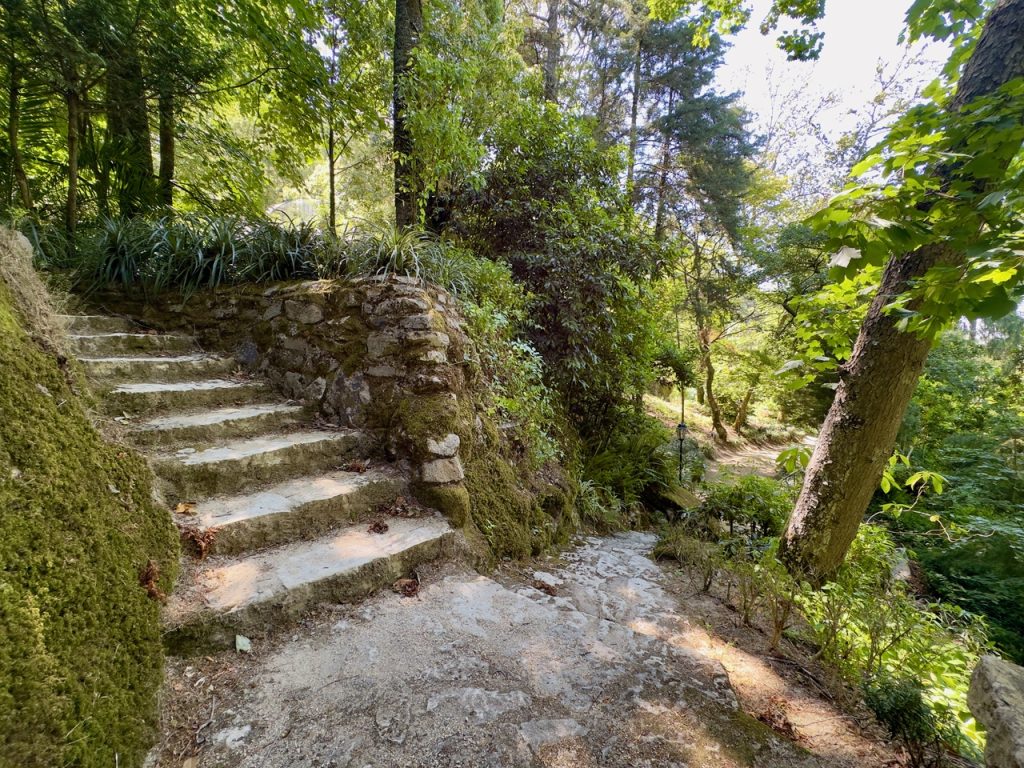
The secluded gardens outside drew me in with their winding, hilly paths. A lookout point at the top provided sweeping views of the town of Sintra as well as the Moorish Castle and Pena Palace on the surrounding hills. You can even glance over the adjoining garden wall to watch the crowds milling about the Quinta da Regaleira.
How to Get There
The Biester Palace is less than a ten-minute walk from Sintra’s center. If you visit the Quinta da Regaleira, you just need to walk down the street. If you are coming from one of the farther sights, you can ride the 434 bus or grab a ride-share or tuktuk.
Conclusion
The Park and Palace of Monserrate and the Biester Palace offer a more relaxed version of the grandeur and beauty of Sintra, Portugal. A day trip from Lisbon lets you enjoy a peaceful walk through gorgeous, tranquil gardens and two stunning palaces with different but equally artistic architecture and décor.
