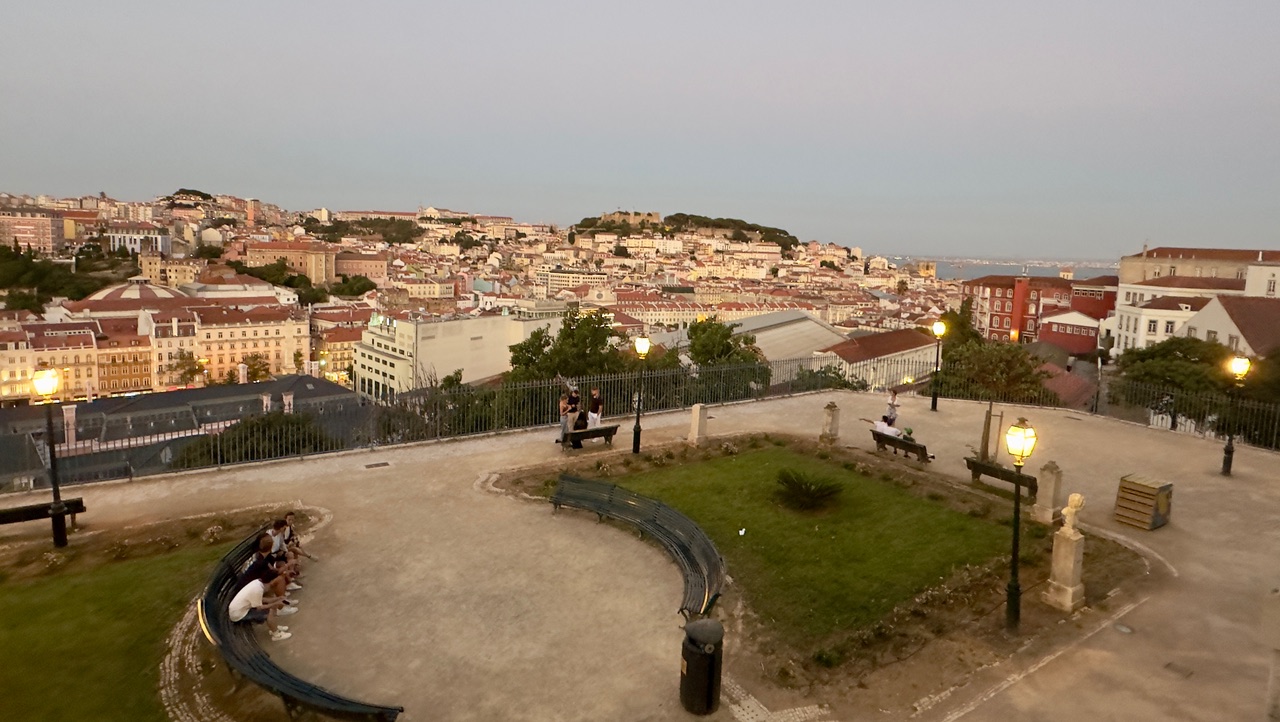
Where to Stay in Lisbon
Which neighborhood should you choose for a stay in Lisbon?
Although a big city, Lisbon feels like a small town due to its pedestrian spaces and walkability. The combination of trams, subways, and buses makes moving around easy and inexpensive.
Activities are spread throughout the city, so choosing a neighborhood to stay in Lisbon depends more on the feel you are seeking. During my stays in Lisbon, I have tried out different areas, and here are my findings.
Baixa
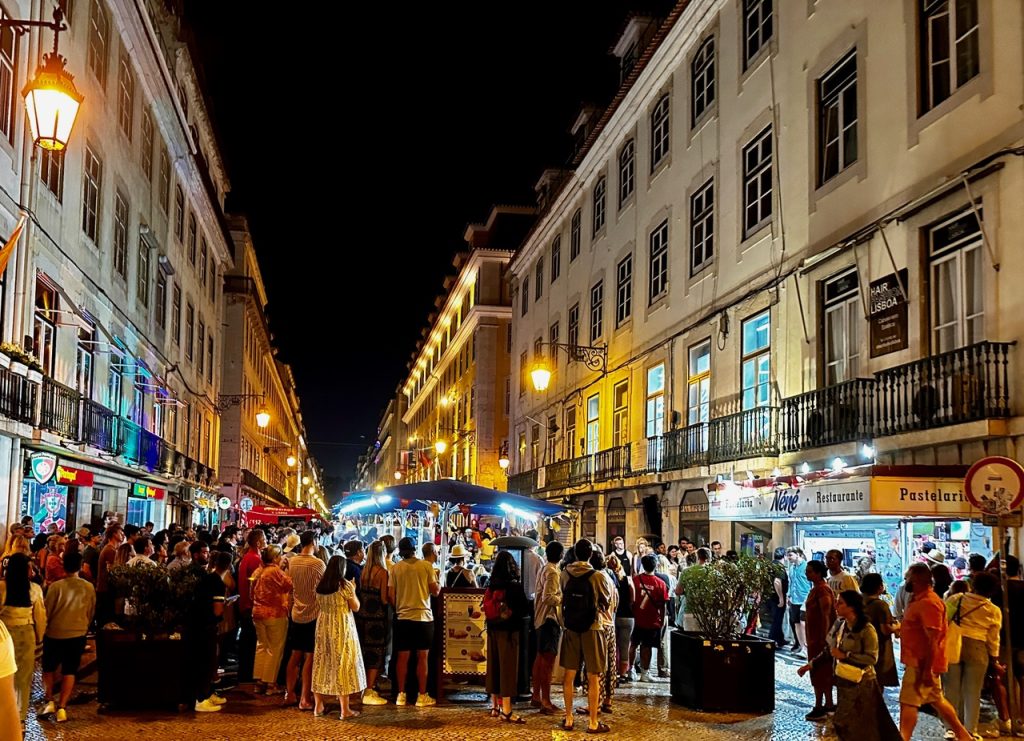
The Baixa is the neighborhood in the low-lying center of the city. This area was devastated by the 1775 earthquake and tsunami. The rebuilding included a grid pattern with wider streets than most of Lisbon. The Praça do Comércio, next to the Tagus River, is an expansive square with restaurants and outdoor patios lining both sides, and the Rua Augusta Arch pointing the way into the Baixa.
Pros:
- Center of the city – Central to all the activities in Lisbon and easy access to the train to Belem and Sintra.
- Packed with restaurants and shops – Rua Augusta (the street running North from Praça do Comércio) and Rua de Santa Justa are the main pedestrian streets lined with outdoor dining and souvenir stores.
- Bottom of the hill – Wherever you explore during the day or night, your trip back to your lodging will be a downhill walk.
Cons:
- Usually crowded with tourists – Many tourists pass through this area at all times, so it can be noisy.
- No views – Your lodging won’t include or be near any of the amazing views overlooking this beautiful city.
- Most expensive
Book your lodging in the Baixa by clicking here.

Chiado
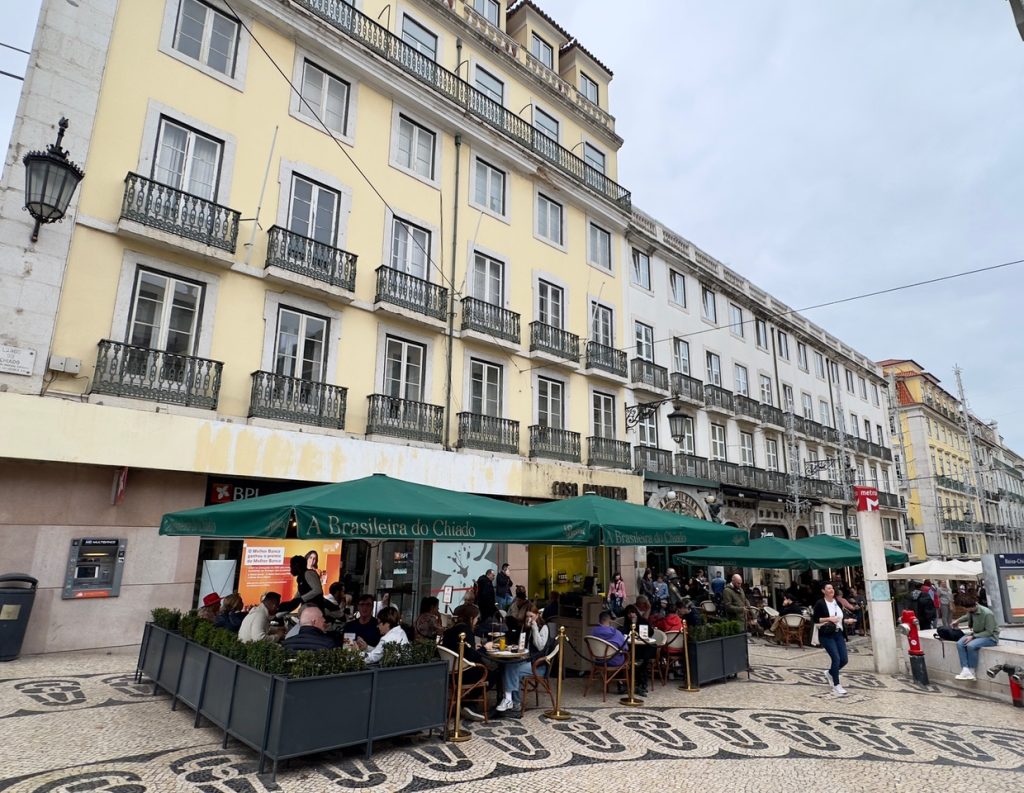
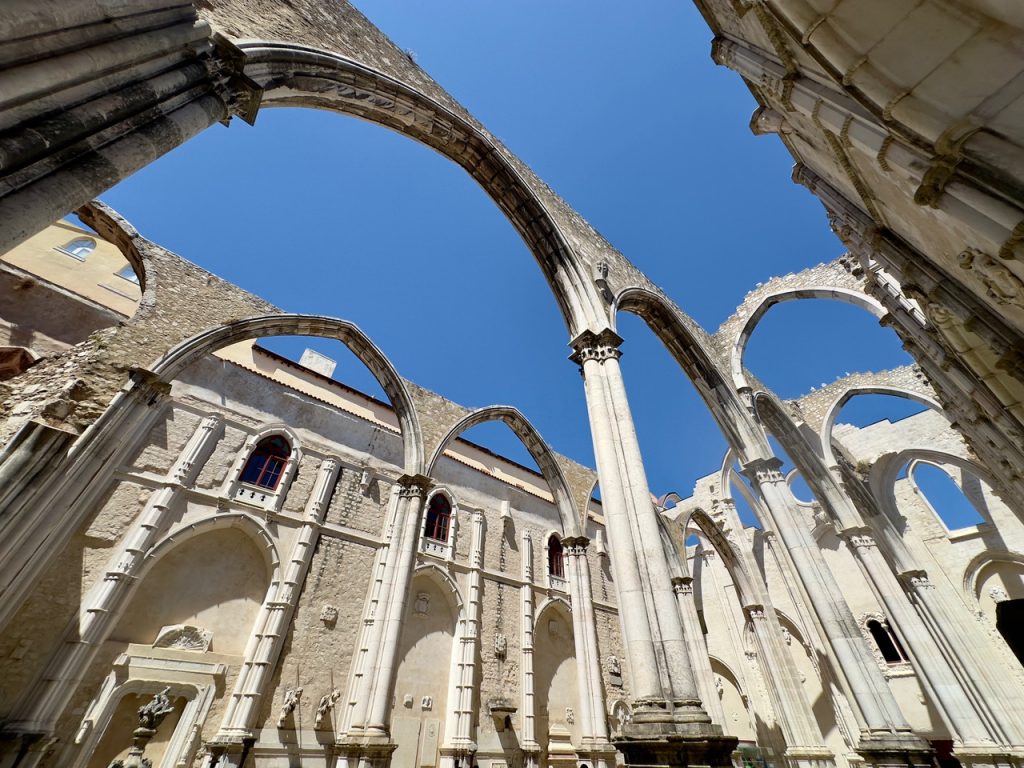
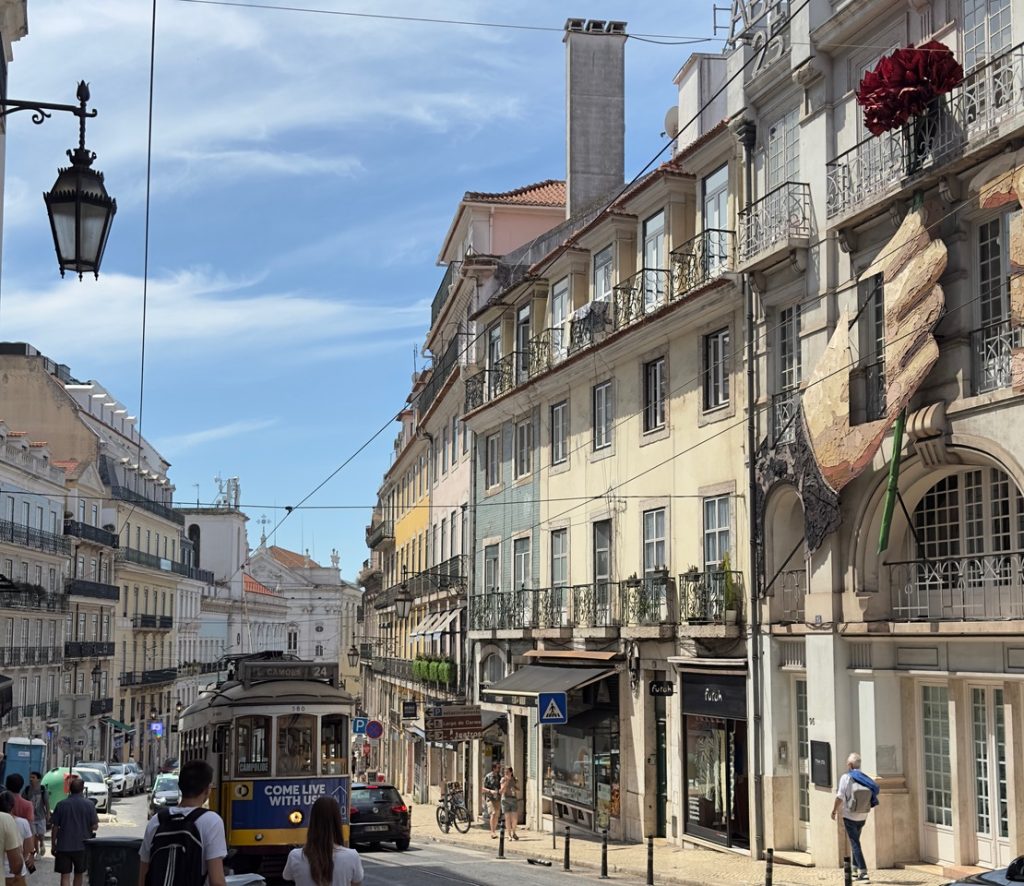
Chiado lies next to the Baixa on the west side. It is the hip area of town with upscale shops and the Amarzéns mall. I always stop into Bertrand, the world’s oldest bookstore, to peruse their small section of English books. The Carmo Archeological Museum is worth a visit, followed by checking out the view from the Justa Lift behind it.
Pros:
- Close to the center of the city – Perfect location to explore the Baixa and Barrio Alto areas, as well as close to the river.
- Halfway up the hill – Your lodging can have a bit of a good view without having to trek way up the steep slopes to the Barrio Alto.
- Near Rossio and Cais do Sodré train stations – These two stations provide easy access to travel to other areas, such as Belem and Sintra, as well as to anywhere in Lisbon.
Cons:
- Crowded – The streets in the Chiado are often very busy with tourists and locals.
- More Expensive – Lodging tends to be more expensive than in some other areas.
Check prices and availability of lodging here
Barrio Alto
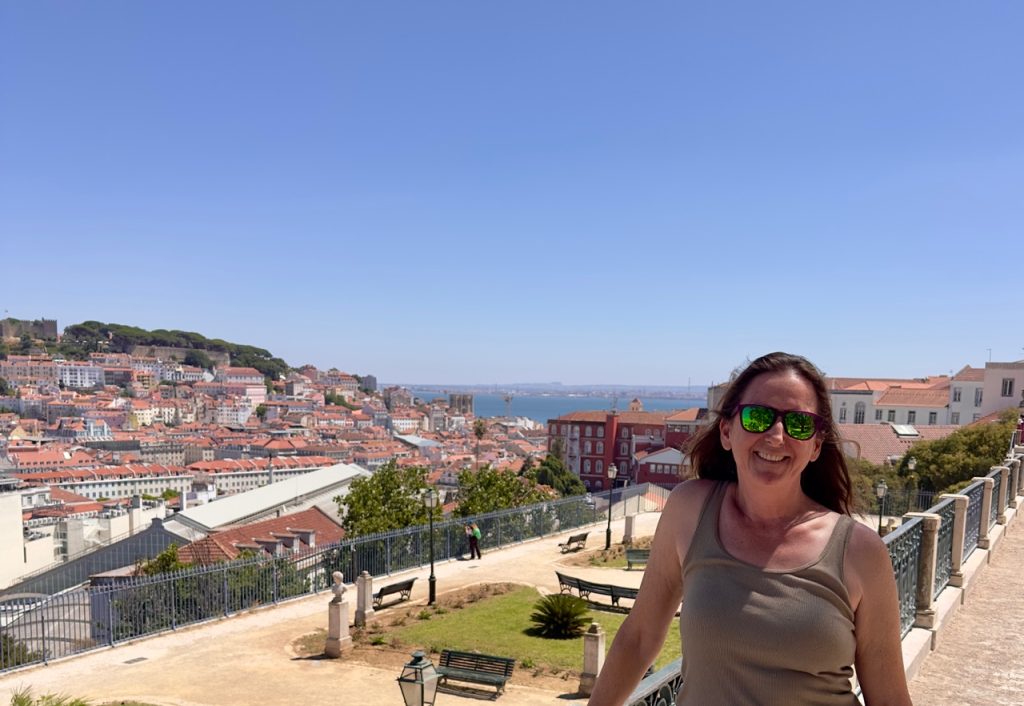
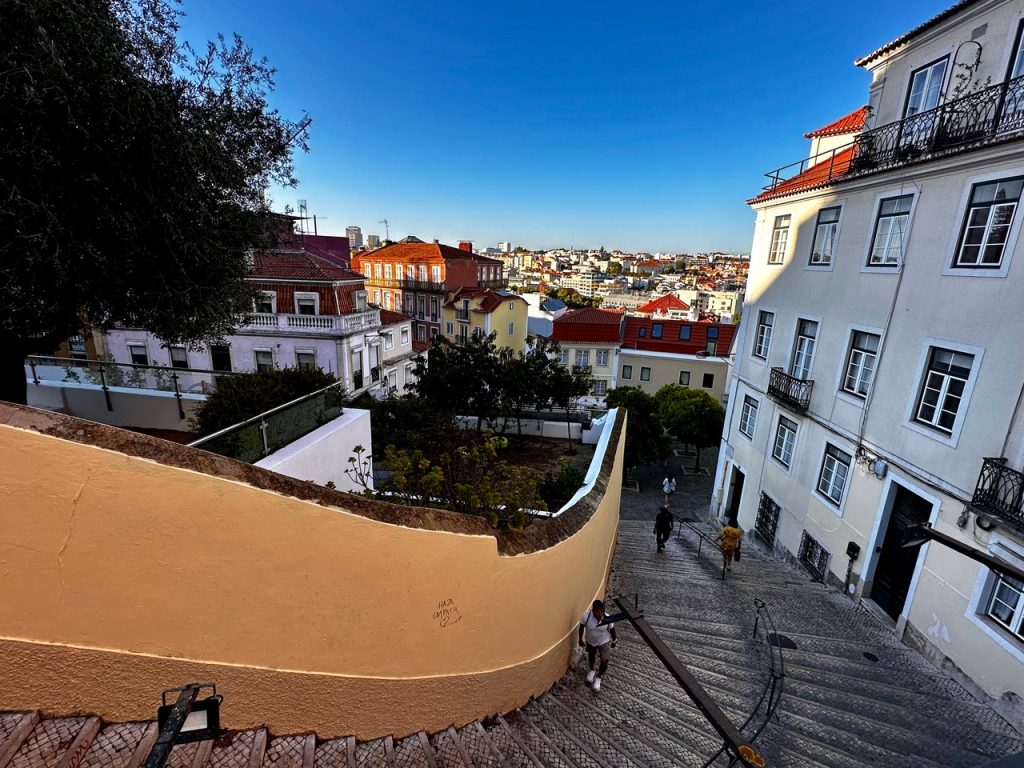
The area where I have stayed most often is Barrio Alto. My favorite place in Lisbon, the Miradouro de São Pedro da Alcântara, features a multilevel park with an incredible view of the hills of Lisbon, St. George’s Castle, and the Tagus River. The narrow streets and distance from the city center make it feel more like you are a local.
Pros:
- Lively neighborhood -This area feels vibrant without an overly touristy vibe.
- Many restaurants and bars – You have plenty of cozy options, often with fado musicians. You can also choose to sit on a small outdoor patio, perfect for people-watching.
- Good views – Lodging and restaurants here have some of the best views of the city.
- Less expensive than the most popular areas
Cons:
- Some streets can be noisy, especially at night – The narrow streets seem to amplify the sounds under your windows, and people pass by at all hours.
- Uphill walk at the end of the day – If you are spending the day in the central part of Lisbon, you will have a climb to return to your lodging. (Hint: learn how to use the trams and subway)
Avenida da Liberdade
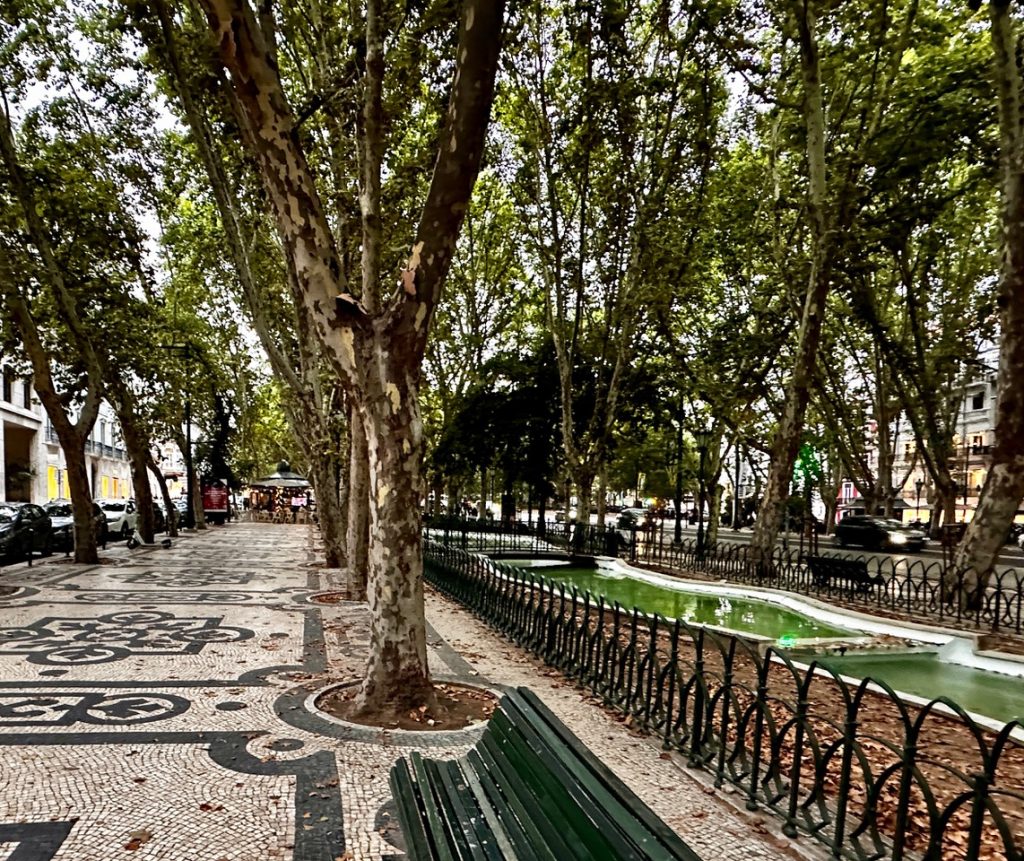
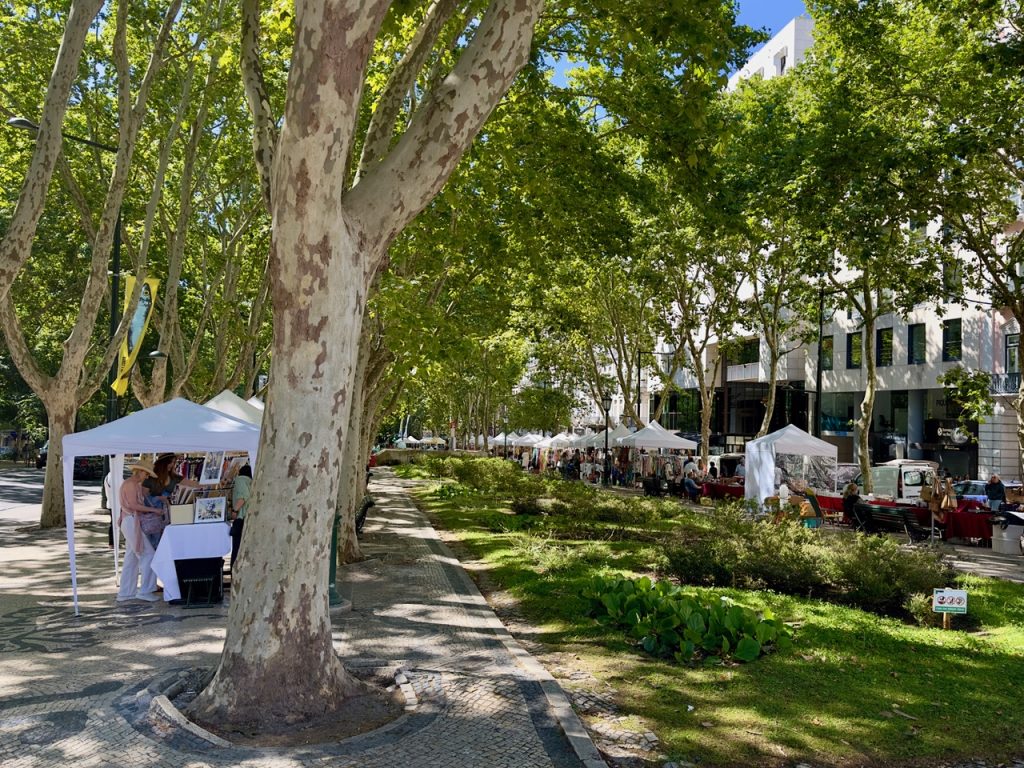
The Avenida da Liberdade is my favorite street in all of Portugal. The boulevard is completely shaded by towering Jacaranda trees, and the wide sidewalks sport elaborate mosaic patterns of basalt and limestone tiles. There are often vendor booths selling many types of crafts, art, and souvenirs.
Pros:
- Scenic boulevard – Stop at one of the kiosks along the avenue for a snack and to listen to a local musician.
- Central – This area is a bit up the hill, but it is still central to all the activities in Lisbon. The Blue Line of the subway makes it easy to get to the city center.
- Upscale shopping
Cons:
- More expensive – Lodging here can be more expensive than in some other areas.
- Moderately uphill – If you are walking from the center of the city, you will be on a moderate slope going to this area.
Alfama
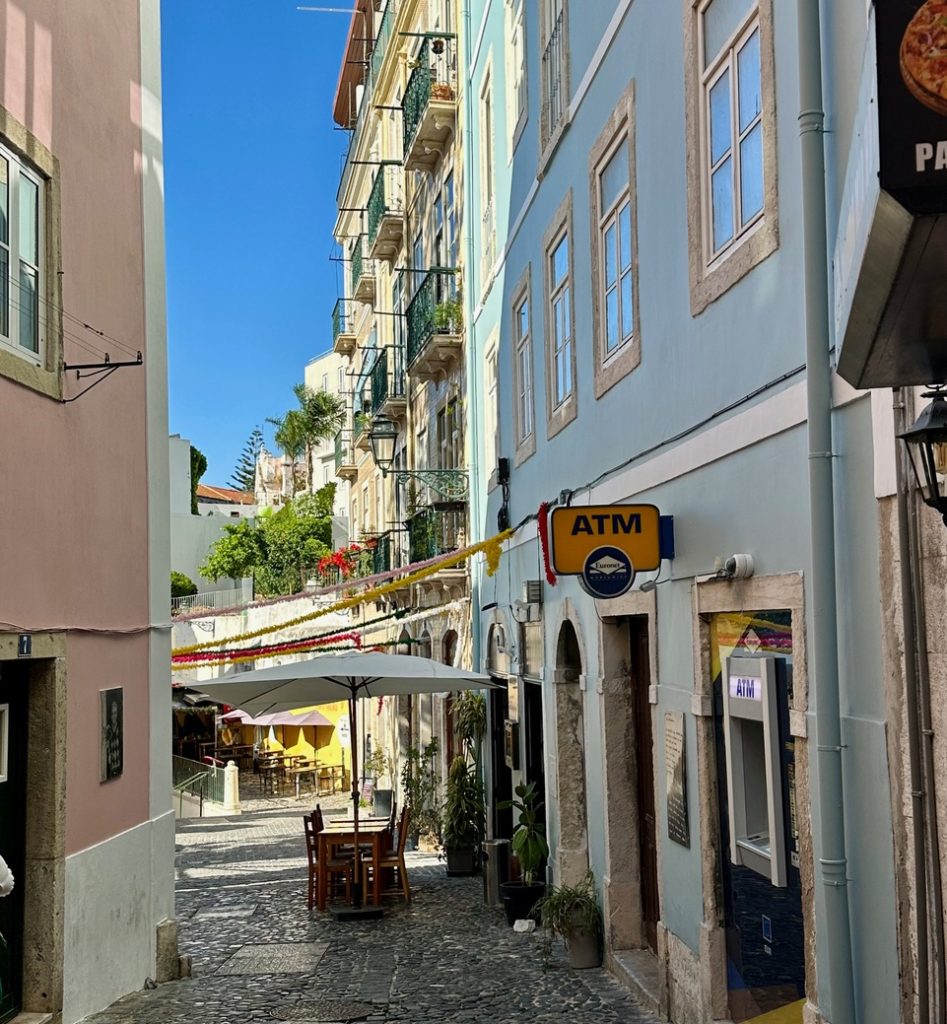
Alfama is the oldest section of Lisbon, the only area still standing after the 1755 earthquake. It is on the western edge of the city center. The narrow, winding streets retain an old-world Moorish feel where you can wander aimlessly. When a friend and I wound through the steep corridors, we bought shots of ginja from two older women who were selling it from a board placed across their threshold.
Pros:
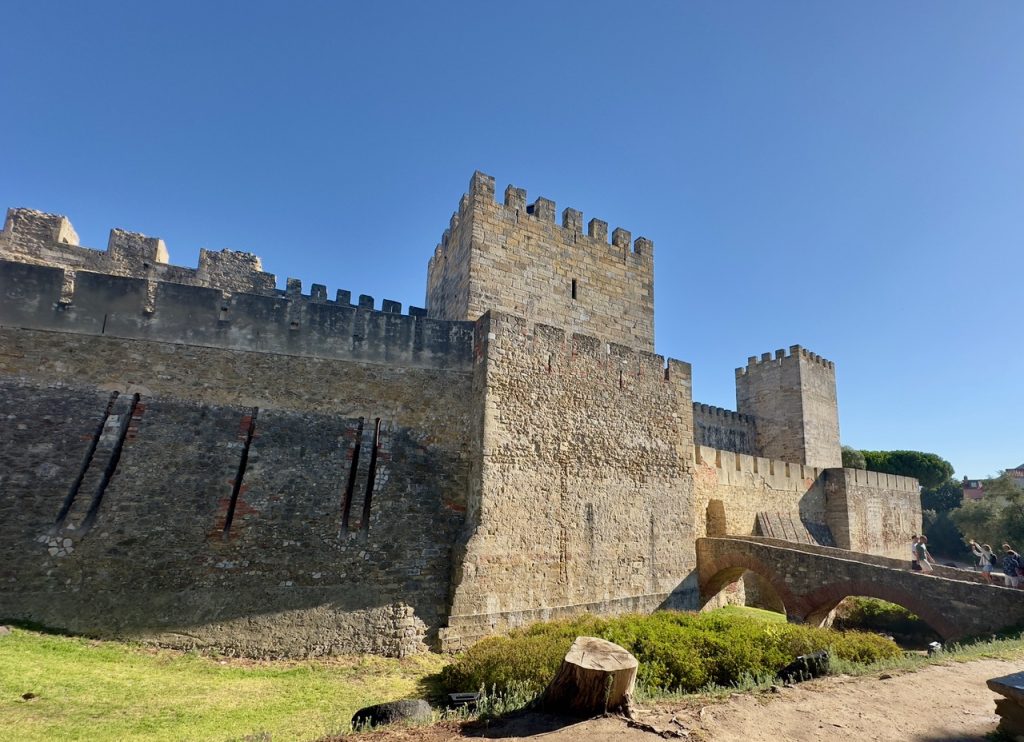
- Near prime sights – Staying in Alfama puts you within a short walk of St. George’s Castle, St. Vincent de Foro, the Se (cathedral), and the street market.
- Best place for Fado music – Wander the streets to find many options for the traditional music of Portugal.
- Interesting narrow, winding streets
Cons:
- Older buildings – This area survived the 1755 earthquake. I have not stayed in this area, but these are the oldest structures in the city.
- May feel less safe – I have always felt very safe in Lisbon, but the narrow, winding streets of Alfama may feel less safe at night.
Principe Real
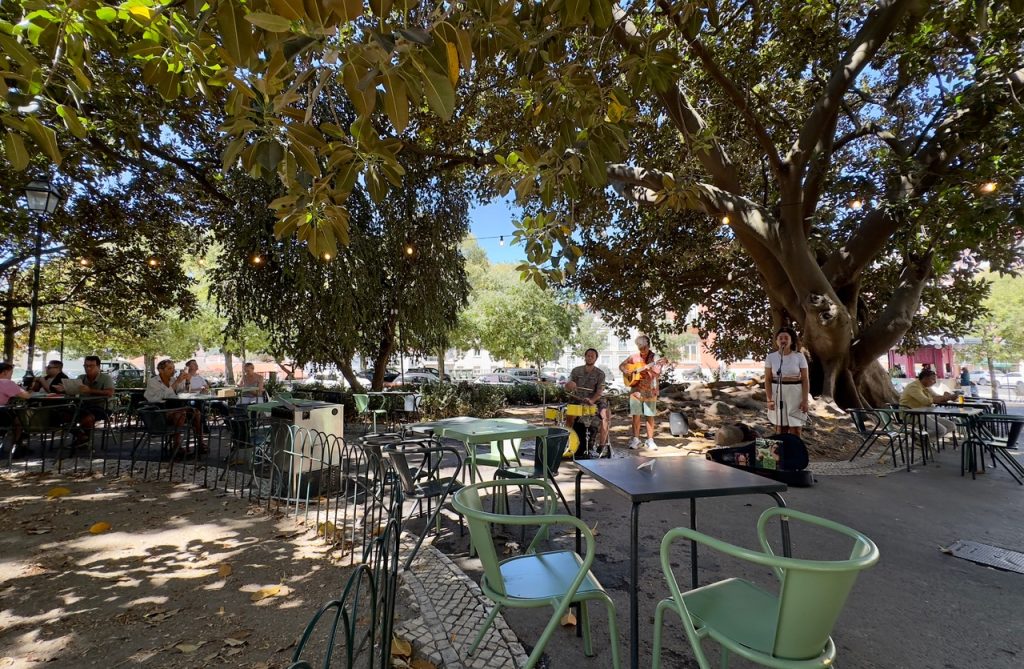
After a few visits to Lisbon, this is now my preferred lodging location. The neighborhood has fewer tourists but good views and restaurants. This area lies north of Barrio Alto.
Pros:
- Fewer tourists, less crowded
- Farmers market at Jardim do Principe Real – Small, but great fresh market on Saturday mornings.
- Jardim Botanico do Lisbon and Jardim do Principe Real – Easy access to quiet green space within the city.
- Less touristy restaurants – Smaller, more interesting restaurants.
- Less expensive
Cons:
- Further from the city center – This area is farther from Lisbon’s tourist activities so you will need to become familiar with public transportation or be prepared to climb the hills more than in other neighborhoods.
Cais do Sodre
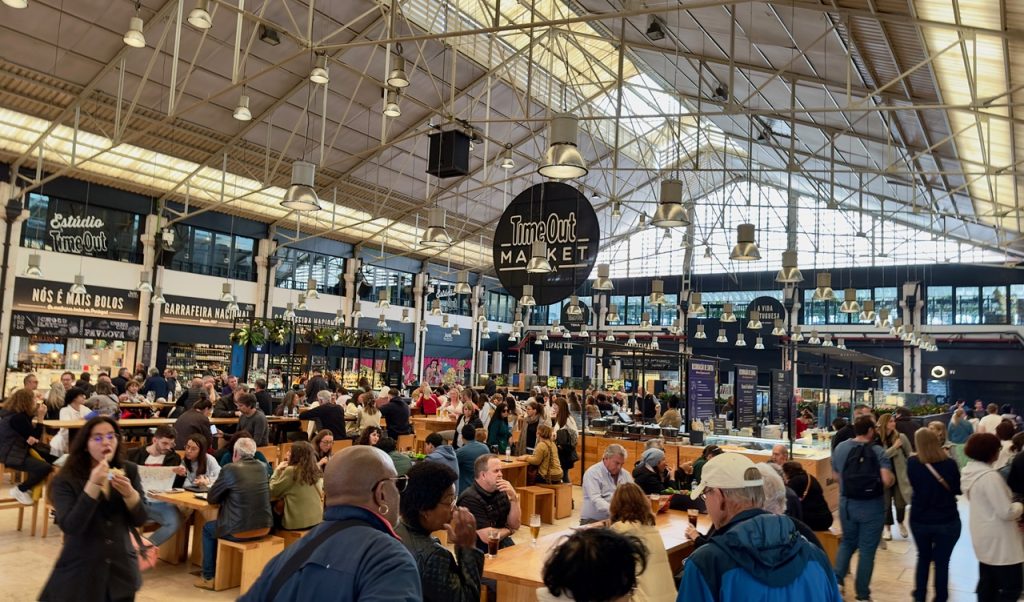
The Cais Do Sodre neighborhood is just west of the Baixa in the low-lying area of Lisbon. I have walked through this area many times but have never stayed there. It is near the river and convenient for day trips to the most popular destinations outside the main city. It is usually crowded with people moving through it and visiting tourist hotspots, such as Pink Street and Time Out Market.
Pros:
- Near the city center – Easy access to the many restaurants, shops, and tourist options in the Baixa and along the Tagus River.
- Near train station to Belem, Sintra, Caiscais, and LX Factory – the Cais do Sodre train station is the departure point for day trips west of the city.
- Many restaurants, including Time Out Market – Many restaurants in this area cater to tourists, with plenty of outdoor patios.
- Bottom of the hill – The end of your day will not entail trekking up a steep hill.
Cons:
- Crowded area – The streets in Cais do Sodre are typically crowded and noisy.
- Farthest from the airport – This neighborhood is far from the Lisbon airport.
Campolide
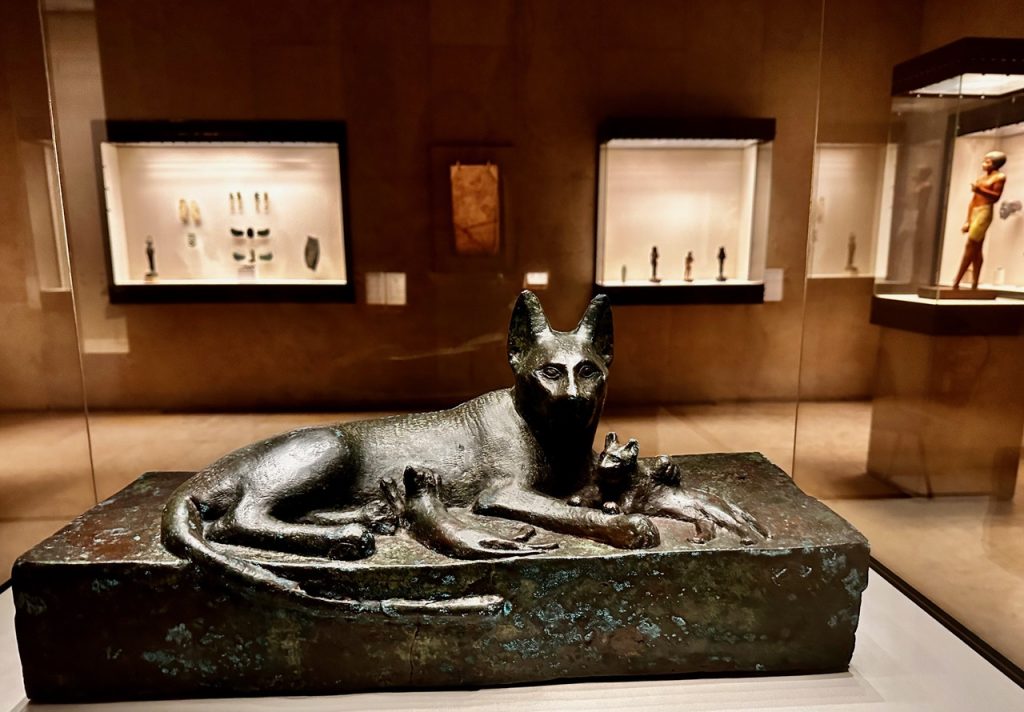
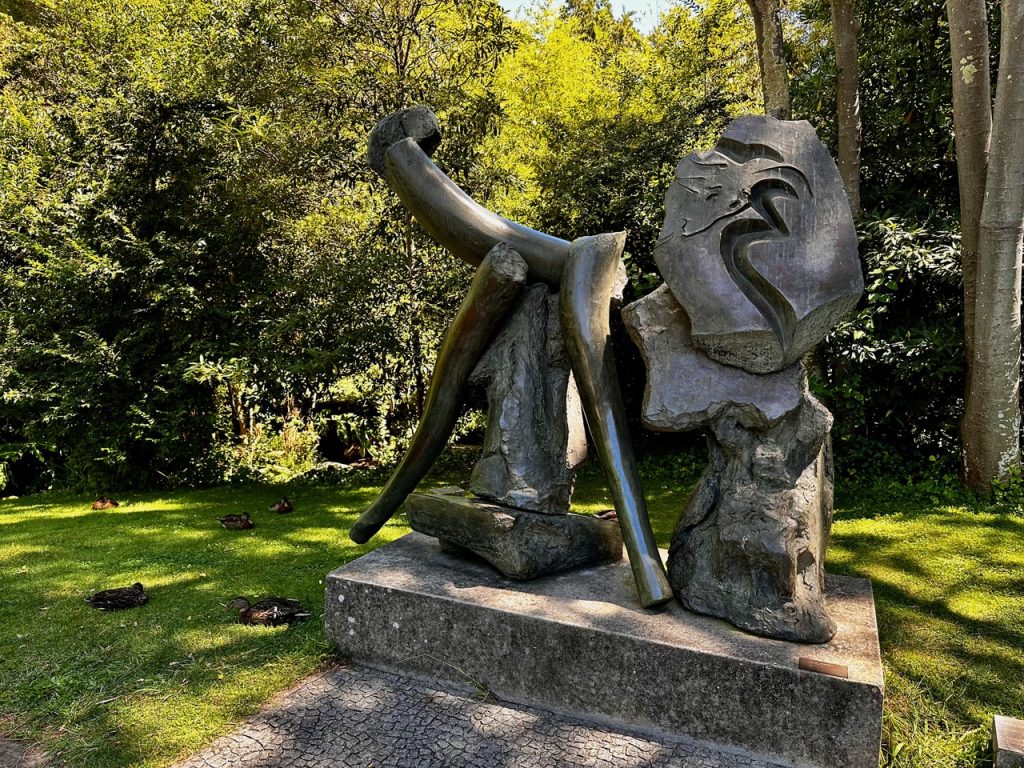
For visitors to Lisbon who want to be outside the bustle of the central part of the city, the Campolide is a good option, especially during high season. Commuting to the main tourist areas will take longer, but the area offers green spaces and the art museum. I will be staying here on my next trip and will add more shortly.
Pros:
- Few tourists – Not typical area for tourists to stay.
- Near Lisbon Zoo, Gulbenkian Museum, and Eduardo VII Park – These attractions are less popular but worth visiting.
- Less expensive lodging than in more popular tourist areas
- Easy subway ride into the city center – The subway system is easy to use. The blue line runs beneath the Avenida da Liberdade to the Baixa and Rossio Station.
Cons:
- On the northern edge of the city – The Campolide neighborhood is far from the city center and most typical tourist activities of Lisbon.
Belém
If you are looking to avoid the big-city buzz of Lisbon but still want to be near some incredible sights, Belém offers a great location. If you rent a car and plan to drive to explore more of the area, such as Sintra, Cascais, and the Silver Coast, it will be easier to do so from here.
Pros:
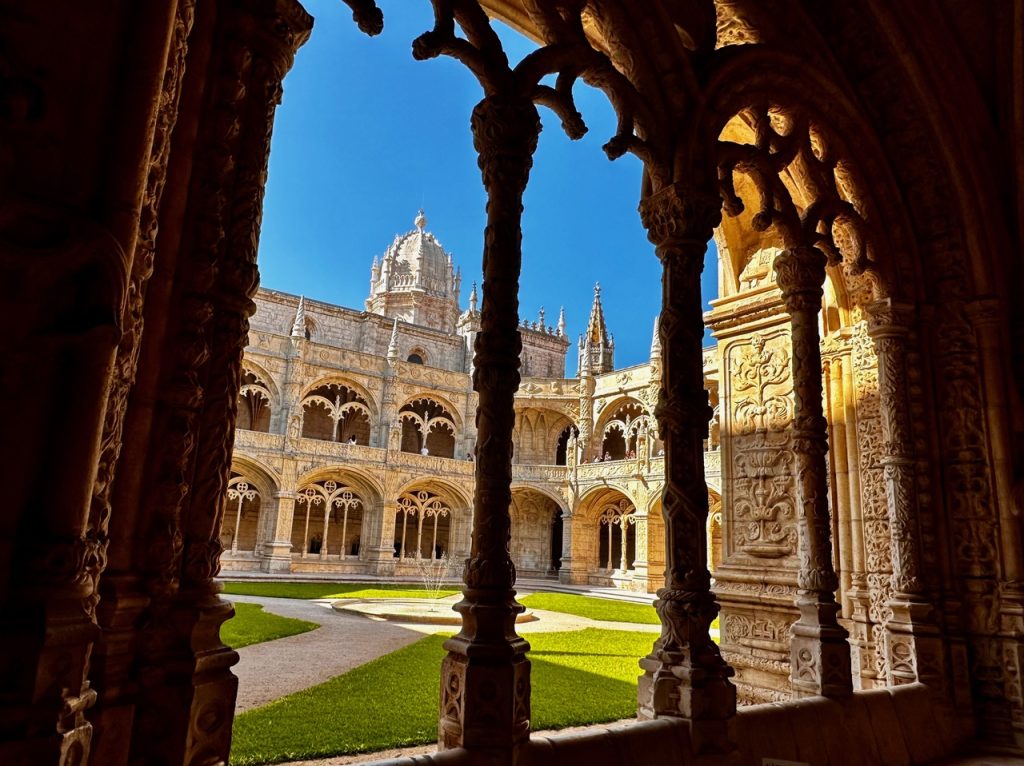
- Close to many incredible sights – Belém is home to the Jeronimos Monastery, National Coach Museum, the Belém Tower, the Monument to the Discoveries, the Quake Museum, and other sights. Pastéis de Belém began in 1837, making pastel de nata with an ancient recipe from the monastery.
- Easy transport into central Lisbon – Access to central Lisbon is easy via train, tram, or ride share.
- Outside of the big city buzz
Cons:
- Less walkable options for activities and restaurants – If you enjoy walking all around Lisbon like I do, staying in Belém offers much less opportunity for this.
- Further from the tourist attractions within the main part of Lisbon

Bonus Tip: One hotel that I have frequented is the Moxy Hotel across the street from Oriente Train Station and near the airport. The rooms are small and basic, but the hotel is very convenient if you have an early flight or are traveling to Portuguese towns through Oriente. It is also near the Oceanarium and a lovely riverwalk.
Conclusion
Lisbon is a small enough city to be walkable and friendly, but large enough to offer many sources of entertainment. It also contains many options for locations to stay. Depending on the type of neighborhood in which you are interested, Lisbon has many good options to enhance your travel.
